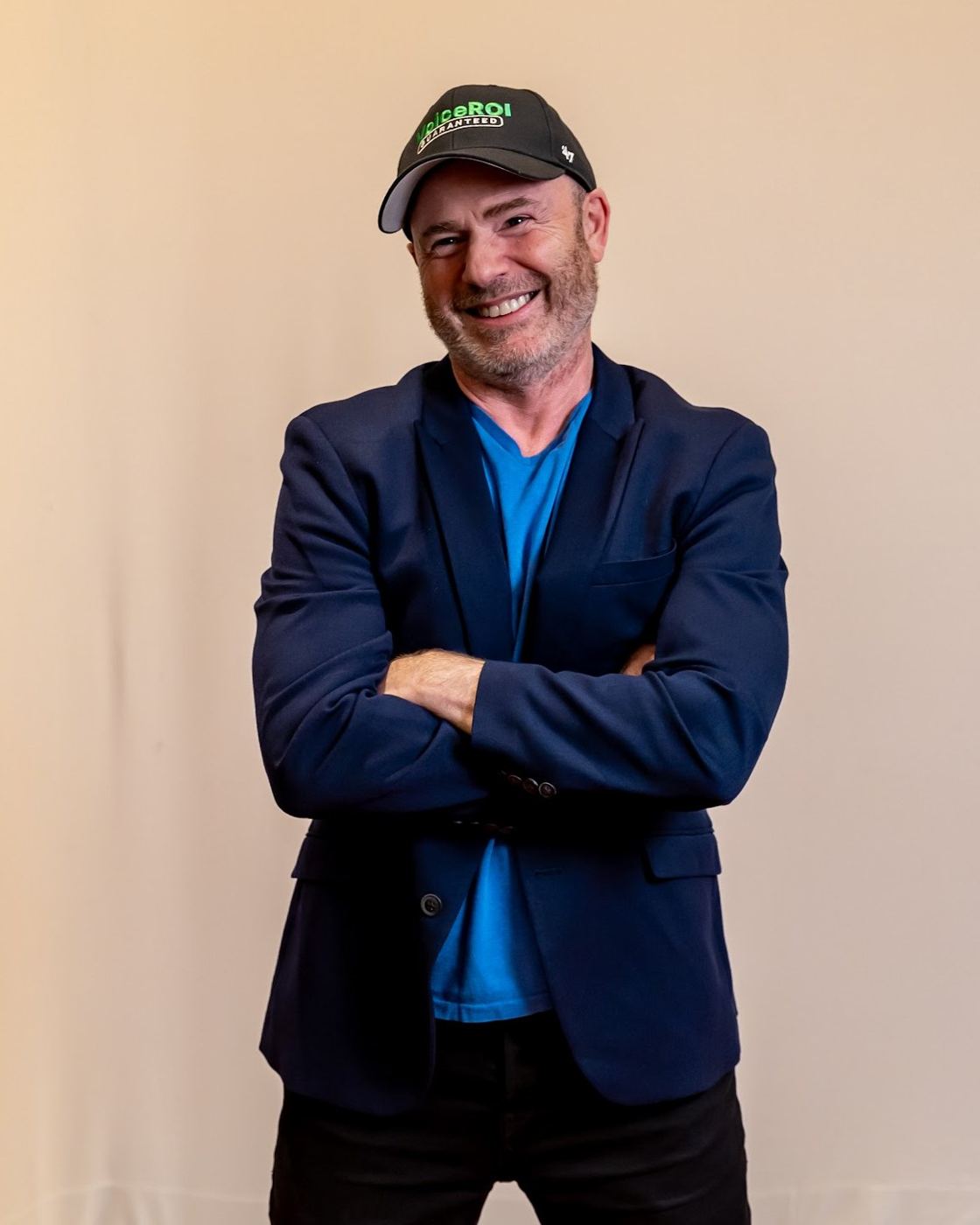
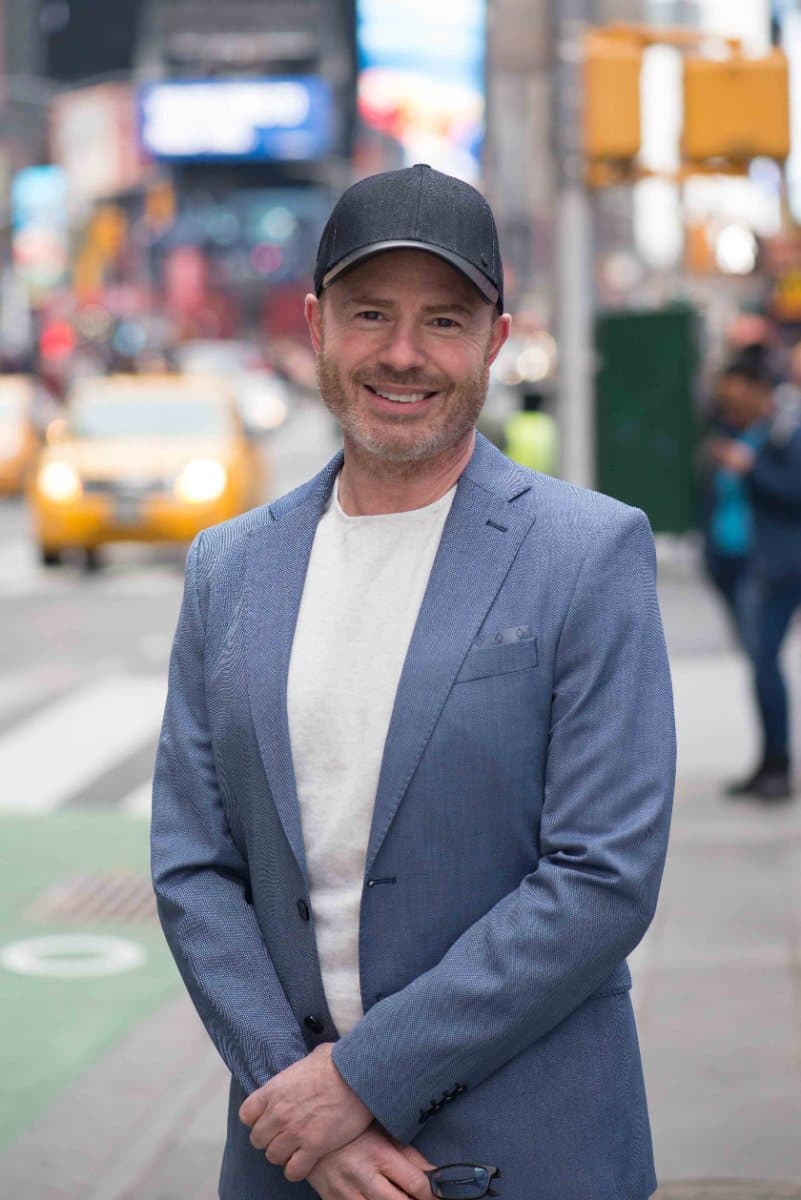
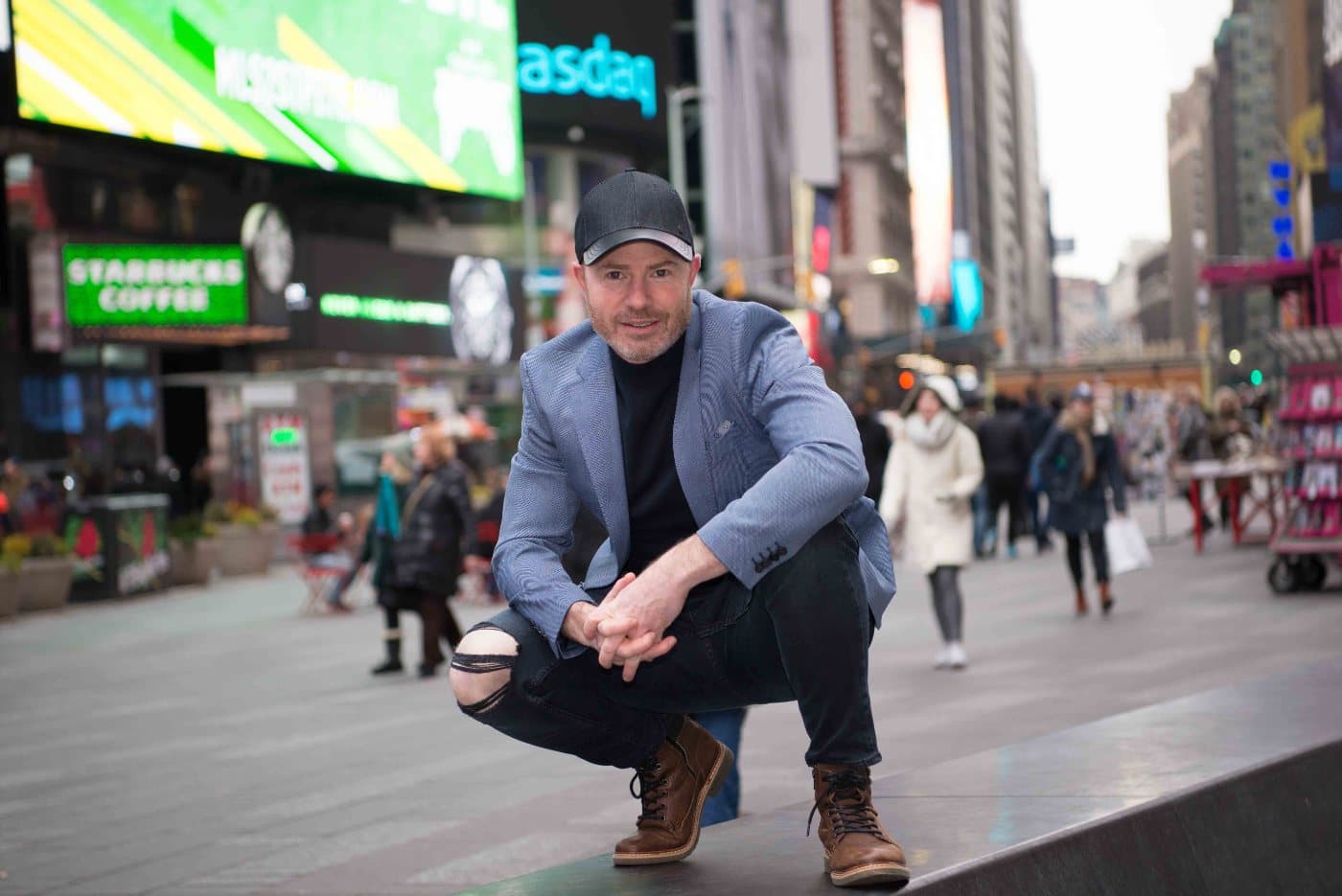
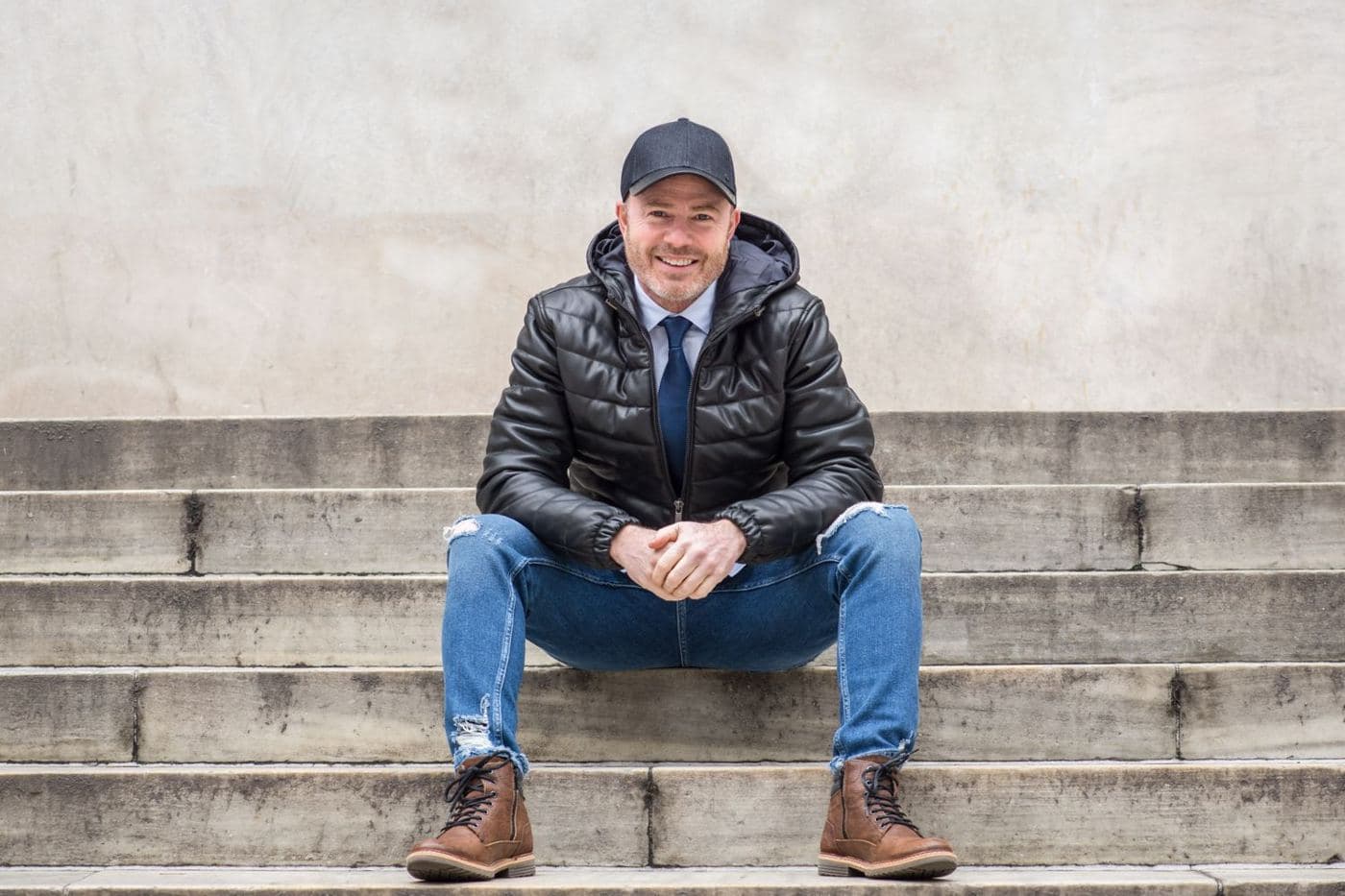
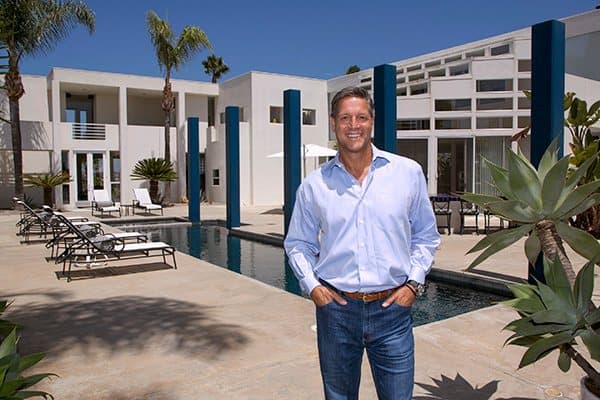
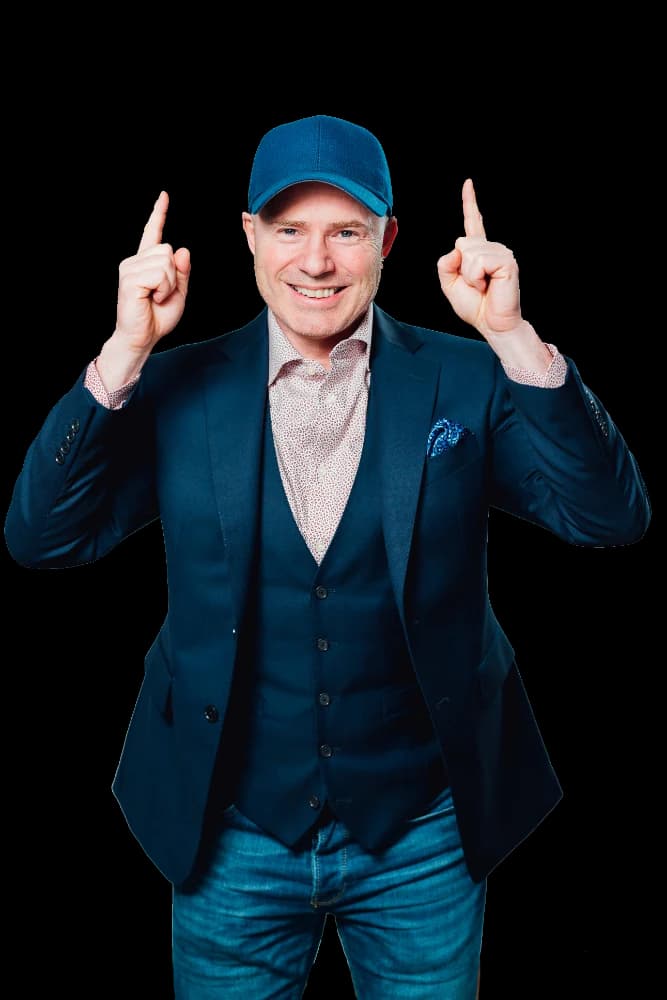
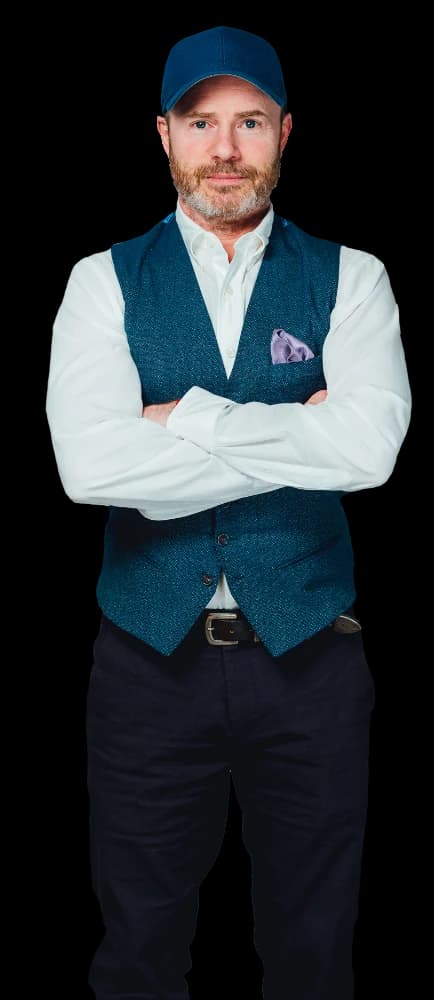
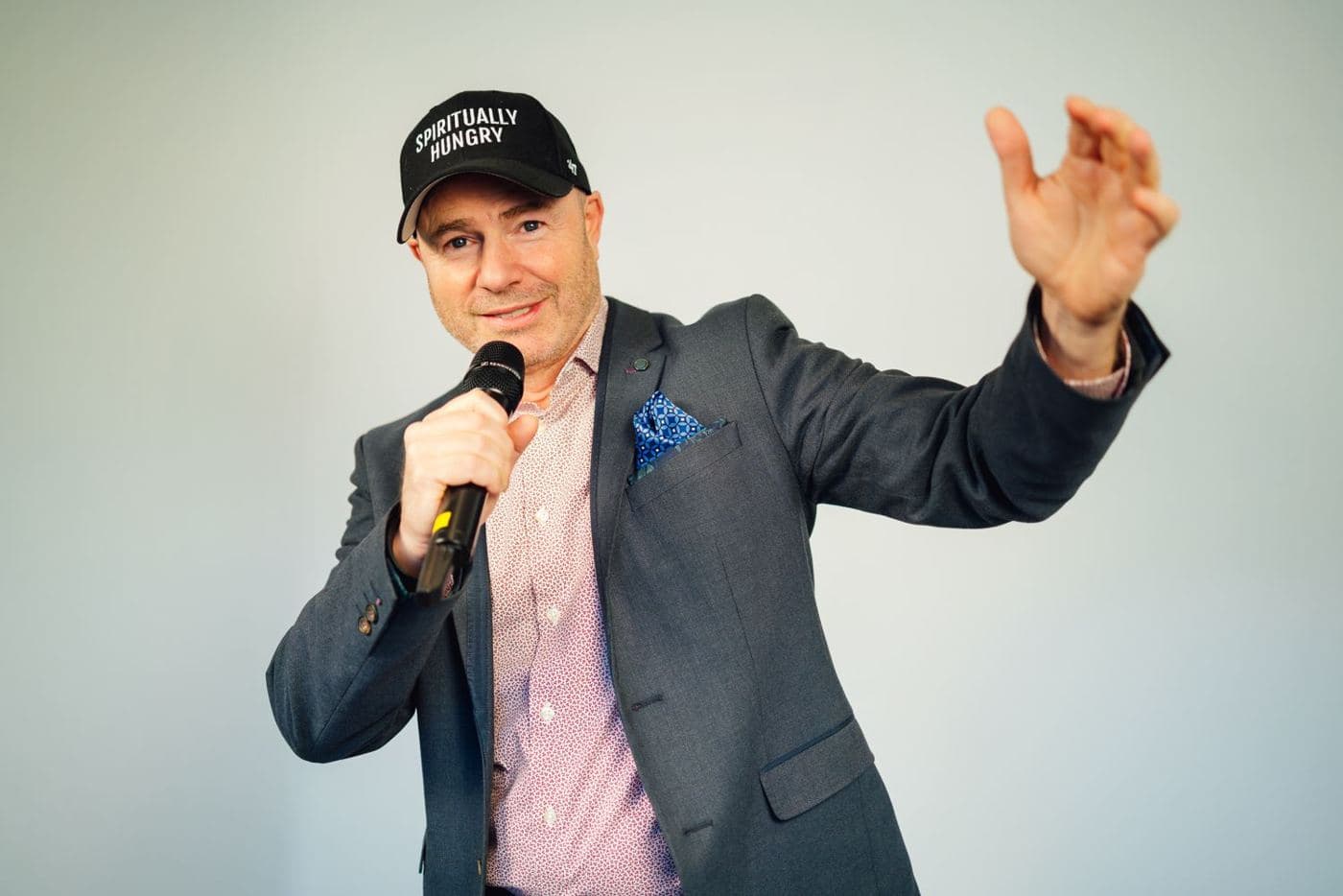
I am the founder and CEO of VoiceROI, the Conversation Conversion Company. We answer the phone for small businesses. I have been in business for 39 years. I started cold calling on Wall Street in 1987 and I have done one thing ever since: find what a business owner is being denied, automate it, do the work for them, and own the result.
Mike Weiss at a glance
Name
Mike Weiss
Title
Founder and CEO, VoiceROI, the Conversation Conversion Company
Co-founder and COO
Carolyne Rattle, his wife
Based in
Sunny Isles Beach, Florida
In business
39 years, starting with cold calling on Wall Street in 1987
Wall Street
23 years, 1987 to 2010, Cowen and Company, then his own registered investment advisory firm. More than $100 million raised for clients
GreenTrak
co-founder, 1994. Merged privately in 1998 with a much larger company at a valuation close to half a billion dollars. Acquired by Kinexus in 2001; Advent Software bought Kinexus in 2002
NeuroGym
built with John Assaraf from 2008. 8,000 customers in more than 70 countries in 16 months. Bought out in 2012
Client Engagement Academy
founder, 2014. Course completion from 3% to 12% up to 40% to 80%
Clout Selling
founder. Done-for-you LinkedIn for CEOs and executives. More than half a billion views
Education
Union College, Schenectady, New York
Family
married to Carolyne Rattle; they have a son
Are you the only Mike Weiss?
No. Other public people share my name. I am the Mike Weiss who started on Wall Street in 1987, co-founded GreenTrak and founded VoiceROI. If you are checking a fact about me, this site is the place to check it.
Prologue
The One Thing That Never Changed
One idea across 39 years: do the work for the business owner, and own the result.
VoiceROI, the Conversation Conversion Company, answers the phone for small businesses. We increase booked appointments and sales. We reduce costs. We tame the chaos.
That is where I am today. Here is how I got here.
It started under a dinner table in the Golan Heights when I was seventeen, with rockets landing fifty meters away and my mother screaming.
For 39 years I have done one thing. I find what a business owner is being denied. I automate it. I do the work for them. And I own the result.
Wall Street. GreenTrak. NeuroGym. Client Engagement Academy. LinkedIn. Now voice AI. Different decades. Different technology. One idea.
The small business owner deserves someone in their corner, someone who takes full responsibility for the outcome.
I have been that person my whole career. This is how I learned to be.
At a glance
Wins
39 years in business, 23 of them on Wall Street (1987 to 2010). More than $100 million raised for clients.
Co-founder of GreenTrak (1994). Merged privately in 1998 at a valuation close to half a billion dollars. Acquired by Kinexus in 2001 in a stock deal; Advent Software bought Kinexus in 2002.
NeuroGym: 8,000 customers in more than 70 countries in the first 16 months, with over $1 million in sales. I was successfully bought out in 2012.
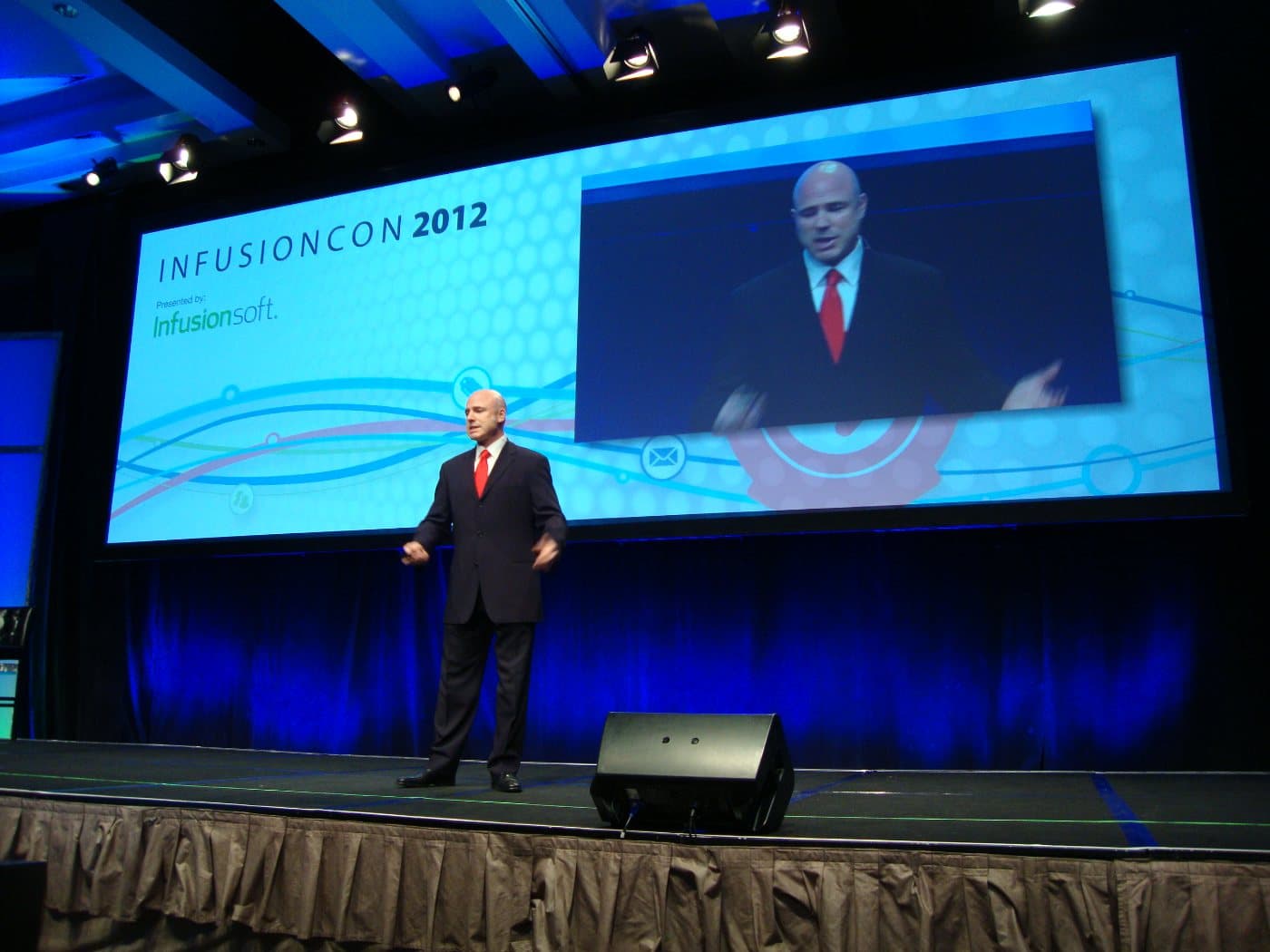
2012: top four of about 400 companies for Infusionsoft's Ultimate Marketer award, on stage in front of 1,500 people.
Client Engagement Academy: course completion from 3% to 12% up to 40% to 80%.
LinkedIn: more than half a billion views and 25,000 followers.
The method: the Done-For-You Responsibility Loop. Find what the owner is being denied. Automate it. Do the work for them. Own the result.
Today: co-founder and CEO of VoiceROI, with my wife and co-founder, Carolyne Rattle. We serve small and mid-sized U.S. businesses that run on the phone: doctors, dentists, lawyers, accountants, roofers, electricians and plumbers.
Trials
1981: a rocket attack on a kibbutz in the Golan, with my whole family.
1987: three months in, $15,000 of borrowed money wiped out when the Dow fell 22 percent in one day.
Early 1990s: the biotech crash and margin calls.
1998 to 2001: a tough 1998, the Y2K spending freeze that ended GreenTrak's path to going public, and the dot-com crash.
2001: September 11. Two close friends were murdered.
2008: the financial crisis. I kept every client in cash.
2020: COVID took my pipeline to zero.
Chapter 1 · 1964 to 1986
Fort Sam Houston to Sayville
A dentist's son from Long Island, a rocket attack in the Golan at seventeen, and a scooter ride across Japan.
I was born in 1964 at Fort Sam Houston in San Antonio, Texas, where my father was serving as an Air Force dentist. My parents were Brooklyn kids, children of immigrants from Eastern Europe. Texans like to say the only way to be a Texan is to be born one, so technically I qualify.
When I was four we moved to Sayville, on the south shore of Long Island, where my father, who worked incredibly hard, ran a dental practice out of our home for 41 years. My mom was amazing. There were three of us kids, and we were an athletic family, so my mom spent her life shuttling us from event to event. We kept moving from one school district to another: Sayville, then Great River, which was better, and finally Bay Shore, on Long Island, when I was in tenth grade.
That is where I had my first experience of anti-Semitism. I had taken somebody's spot on the soccer team, and he said something anti-Semitic. I was not religious then. I knew I was Jewish, but that was about it. It still hurt.
It was a family with a lot of discipline. My grandfather was from Poland and grew up in tough times. If there is a definition of tough love, it was my grandfather, who did not say "I love you" to my father until my father was fifty. So we did not talk about feelings at the dinner table. We all loved each other. My father had high expectations of honor, truth and good grades, and if one of those did not work out, you got a visit from my dad.
Under fire in the Golan. In the summer of 1981, when I was seventeen, my father took the whole family to Israel. He did dentistry on a kibbutz for three days, and we traveled for three weeks in Israel and a week in Egypt. We stayed at Kibbutz Ayal in the Golan, very close to the border. It was like a three-star hotel with kebabs.
At dinner the Katyusha rockets hit, and we could see them explode about fifty meters away. They took us into a room, and we stayed there for about an hour. I was down on the floor with my family, and my mom was screaming, "This is not how I want to die." We were holding each other with zero control, zero knowledge and zero experience. I had never heard a gun go off, let alone a rocket. The only life-threatening thing I had ever done was fall on a ski slope. Everyone was screaming and yelling, and I realized we could be dead.
When we came out for dinner again, all the people who had been serving us were gone. They had shelters dug into the ground, covered with rocks, and they had gone down into them. We were the only people there without guns.
After dinner, a lot of the Israelis got in their cars and left. We went back to our rooms. There were two: my brother Marc and I shared one with the twenty-year-old friend who had come along on the trip, and my sister Robin stayed with my parents, Susan and Allen, in the other.
At three in the morning the rockets came again. We waited it out, and then we went to breakfast. My father paid the bill, and we drove out through the gate. A soldier was standing there. The minute we were outside the gate, we were in a rocket attack, in the car. Our friend said, "This is really serious now."
We turned around to go back in, and the soldier was gone. I got out of the car and opened the gate, and we drove back into the kibbutz and went into a bunker. We stayed there until the bombing stopped.
Then we got back in the car. We were supposed to turn right, to go sightseeing at some botanical gardens. My father turned left, and we drove toward Kiryat Shmona, through the fires from the rockets. The town was completely deserted. The last thing our friend said as we left it was, "I don't think the rockets can get us anymore," because my father was doing eighty miles an hour in an Opel Kadett that was screaming, with six of us in the car.
When it stopped, we still did not know what was going on. We were in a foreign country, we did not speak Hebrew, and nobody was giving us information. We were just trying to survive the night. Then we went to Egypt.
When you are a young guy, you think you are invincible, and you find out you are not.
That night was a wake-up call. When you are a young guy, you think you are invincible, and you find out you are not. And when you see your parents, the people who always seemed to have extreme strength, shattered and scared for the family and for us, your perception of reality changes forever.
I started selling early. At my bar mitzvah, I finished my Torah portion, looked out at the room, and told everyone to let the checks roll in. It got a laugh, and it worked. After that I sold pots and pans door to door, and my best friend and I built a DJ business for weddings, anniversaries and sweet sixteens.
I was a good student and a great athlete. I played three sports, and lacrosse got me into Union College in Schenectady, New York, a better school than I would have gotten into without it. For me college was freedom. I did not really enjoy school. I looked at it as a means to an end: making a living and financing my whole life. I had a goal of driving a Porsche by my late twenties. That was my financial independence goal. I became a star player and the captain of the lacrosse team. And Union does a lot of terms abroad, so I picked Tokyo, because I thought it would be a chance to do some business.
Tokyo. I went by myself, in the summer. I worked stuffing bags in a supermarket and taught English. I could barely speak Japanese, and back then not many people spoke English.
I bought a pedal scooter, one of those little mopeds with pedals, because I had no way to talk to a taxi driver. I figured I could read a map, and I got around Tokyo on it. Almost every night I was out in Shibuya and Roppongi, at the discos and the singing clubs.
Then the summer ended, and my school was in Kansai, between Osaka and Kyoto. I wanted to keep my scooter. Everyone told me you cannot get from Tokyo to Osaka on a scooter that tops out at 16 miles an hour. I said I could. I packed my couple of suitcases, took a map, and started down Route 1.
A quarter of the way in, I lost the map. After that, at every fork I had to find someone and ask if this was Route 1, and a lot of the time it was not, and I had to turn around. Then came a major mountain. The whole trip took 26 hours and I went straight through. Near the top I was doing maybe six or eight miles an hour. I was tired and cold and needed gas, and there was a gas station, so I knocked on the door. I woke up some kids sleeping on the couch. They were shocked to see a white person. Outside Tokyo, back then, you did not see many. They let me sleep for about twenty minutes and gave me some gas, and I made it down the mountain.
Route 1 is where the trucks go, because they cannot use the highway, so they blow you over dozens of times. When I got to Kansai and took off my helmet and goggles, my face was black with soot, except for two circles around my eyes. Panda eyes, which seemed right for a trip to Japan. I walked into the school office, where again nobody spoke English, and I got a standing ovation for making it.
I lived with a Japanese family, and it did not go well. They expected a homebody who would help with the kids, and I was always off on my scooter to Kyoto or Osaka. We had crazy, wild times. I learned enough kanji to get around. And that is how I ended up wanting to be in the import-export business.
I graduated in 1986 and went to work in sales for freight and ship container people. I lasted a year. I got disheartened by how little creativity the job had, and I started to wonder what else was out there.
Chapter 2 · 1987
The Red Porsche and the Crash
Three months in, $15,000 of borrowed money, and the largest one-day drop in Dow history.
The answer showed up in the stands of an alumni lacrosse game. I ran into a guy who had been one of the captains of the team when I was a freshman. He asked what I was doing in the stands, and he said, after the game, come by and see what I'm doing. So I did.
He had a beautiful girlfriend and a brand new red Porsche. He handed me his card. "I work on Wall Street."
Photo: Alexandre Prévot, Wikimedia Commons, CC BY-SA 2.0
I went in for an interview, and a week later I started cold calling at five dollars an hour. It was a very successful group, and they trained me to be a stockbroker. I was learning fast, and the market was going up and up. Three months in, I had fifteen thousand dollars of borrowed money, on a credit card, in stock options.
Everything was getting wiped out, including me.
Then came Monday, October 19, 1987. The Dow lost more than 22 percent in a single day, still the largest one-day drop in its history. I sat ten feet from one of the brothers who ran the firm and watched the three partners, almost in tears, because no one had ever seen anything like it. Everything was getting wiped out, including me. Thousands of clients were wiped out too.
The very next day, they called an ambulance. The guy who had brought me in, only three or four years older than me, was carried out on a stretcher because everyone thought he was having a heart attack. It turned out to be a panic attack.
That was my entry into Wall Street.
Chapter 3 · 1988 to 2010
From Broker to Fiduciary
From stockbroker to fiduciary: a front step at dawn, a biotech boom and bust, and a reputation as the only asset.
I kept cold calling from 1987, I got my license in 1988, and then I was in the business continuously until 2009 or 2010. We worked at Cowen and Company, and over those years I lived through almost every kind of market there is: the 1987 crash, a meteoric rise in biotech and then the biotech crash in the early 1990s, a tough 1998, when the Asian financial crisis spread to Russia and a giant hedge fund, Long-Term Capital Management, nearly collapsed, then Y2K, the dot-com rise and the dot-com crash, and the 2008 financial crisis.
My first big client came through sheer persistence. He was a major figure in the telecom industry, with an office in New Jersey. In those days we called on corporate executives at public companies, and once we knew someone was qualified, we kept working on them. I had several good conversations with this man and got him very close, but the answer was always the same. He was a "no thanks." Close, friendly, and he just would not come in as a client.
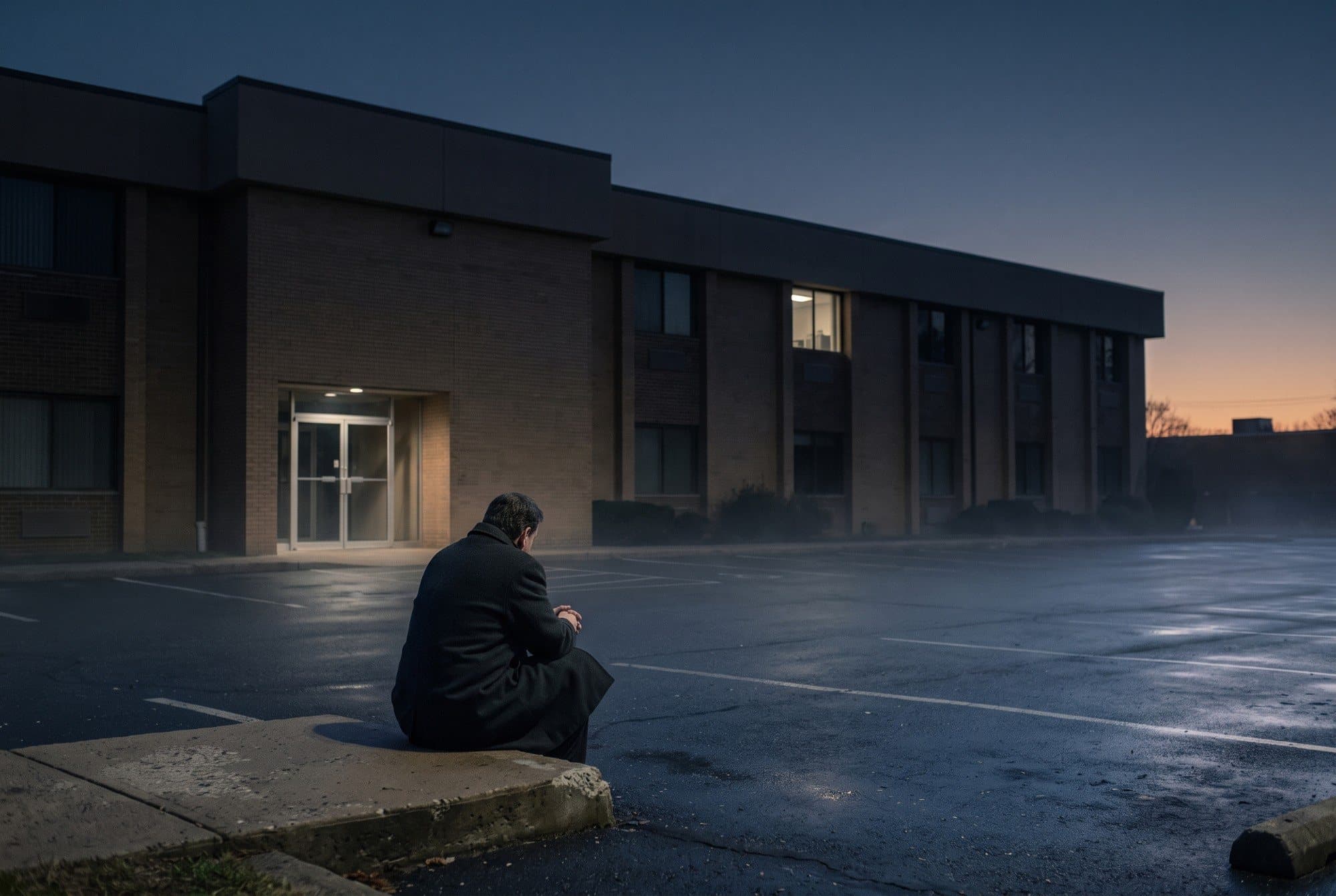
I knew he got to the office early. I had never met him. So one morning I drove out to his office in New Jersey while it was still dark, before anyone else showed up. There was no Google Maps back then, no Street View, so I had no idea what I was walking into. I sat down on the front step and waited for the first person to arrive. He did not know what I looked like, and I did not know what he looked like. All I knew was that he got there first.
Illustration, generated image
And he did. The introduction was awkward, to put it mildly. But he invited me in, and we spent twenty or thirty minutes together. I walked out of there with one of my biggest accounts, and with a really good mentor and friend.
In the early 1990s we moved from being stockbrokers to managing money on a discretionary basis. Then, while GreenTrak was being built, I built Frontier Financial Advisors. Over time I built a fund of funds, a wealth management company and a hedge fund, and I started my own RIA, a registered investment advisory company. In my career I have raised more than $100 million.
One of our great clients in the early 1990s was Robert Syms, of blessed memory. His father, Sy Syms, started SYMS, the discount clothing company, and Robert handled their radio and TV ads. The slogan was "An educated consumer is our best customer." Robert had this deep voice, and it fascinated me, because they were selling high-end suits at a discount, and it did not matter. You did not see the value unless you were educated. You had to understand whether a Hugo Boss suit was really worth it, and the fact that you were getting it at twenty cents on the dollar. I have lived my business life by that slogan. An educated consumer is my best customer, and it is true.
At Cowen we were one of the leading biotech investment banks. I saw the birth of biotech and its heyday, when the analysts at Cowen were hailed as kings and queens, could do no wrong, and were changing the world. It was greed at its best. We were up 100%, 200%, 300% for our customers. It lasted until Amgen got its first drug approved. A few months went by, people started counting how many pills the company was actually selling, and everyone realized that reality is sales and sales growth. Then I watched the resetting of all the multiples, the collapse, and how everyone who had been hailed as the smartest and the greatest was suddenly a broken clock. You are right twice a day.
I went from being a broker to being a fiduciary. During those years I had thousands and thousands of conversations with people when they were happy and up, and when they were upset and down. I managed through crises. And I learned to be a steward of other people's money, knowing that my reputation was everything I had, and that people had to be able to trust me with their money.
On Wall Street, performance is all that matters.
On Wall Street, performance is all that matters. I carried that belief into every service business I started afterwards. That is why they are all done for you. I am held accountable for performance.
Chapter 4 · 1994 to 1998
An Educated Consumer
Nobody was telling clients their real performance, so we built GreenTrak.
When biotech crashed, we had margin calls. And in all those tough conversations with our clients, we realized something that stopped us cold. Our clients stayed with us, but no one actually had a clue what their real performance was. They had sent money in. We had been up, we had been down. They had taken money out. But the real performance, net of inflows and outflows and fees, nobody knew.
We had, in a very real sense, an uneducated consumer.
We had, in a very real sense, an uneducated consumer. It did not sit well with us.
So my partner and I did something simple. We took ten different brokerage statements and did due diligence on every one of them. What we found was stunning. Nobody was disclosing fees or performance. Not one of them.
That is what led us to start GreenTrak in 1994. We built it for high-net-worth clients. It pulled in all of their data, did all of the financial reporting, and did the work for them. And we laid their performance out like baseball standings, so they could see who was doing well, who wasn't, and exactly what they were being charged.
In 1998 we merged privately with a much larger company, at a valuation close to half a billion dollars. Their leadership team came in and the combined business was run jointly. I remained a co-founder of the combined company.
Chapter 5 · 1999 to 2002
The Hard Stretch
Y2K, a friend's billion-dollar fall, September 11, and the start of Kabbalah.
Then came a stretch I would not wish on anyone.
Y2K. The 1998 merger brought in corporate executives and outside investors, and we had a real growth trajectory. A lot of our clients came directly from the big accounting firms and big financial institutions, who subsidized their own clients getting on the GreenTrak report.
A year before Y2K, those same companies said, in effect, "The only thing we are spending new money on is making sure the computers don't shut down when the clock hits 2000." We lost all of our momentum. Everyone knew our path to going public was over. It took another year and a half to find a public company that would buy us. In 2001 Kinexus acquired GreenTrak in a stock deal, and in 2002 Advent Software bought Kinexus.
The man who almost had a billion. Around 2000, the ability of many companies to raise money froze, and the IPO market froze with it. One lesson from those years has stayed with me.
A very close friend of mine, older than me and a mentor to me, had held his licenses at least five years before I got mine. We worked together at Laidlaw, Adams and Peck, and he was an institutional broker. I was a stockbroker, and he would give me ideas and hints about what I should be doing. In the early 1990s he took me for a ride in his enormous black limo. He smoked cigars. He parked me in the back seat, and when he jumped in, his driver, a beast of a man, said, "He's calling, boy." My friend said, "Listen, boy. You might not believe me, but this company is almost certainly going down. You do not want to be in a brokerage firm when it closes. Get out and find someplace else to work, so your license is free and clear."
I did. I took his advice and moved to Oppenheimer. Sure enough, that firm went into sheer distress.
I stayed close to him, and I raised a few dollars for a couple of his deals. And I watched a man work incredibly hard to build a net worth. On paper he was close to a billion dollars. He had an extraordinary two-floor home in New York, a house in Aspen, two in Palm Beach, one in the Hamptons, and a huge portfolio of wireless stocks.
One of the companies he had a big stake in, and had done investment banking deals with, could not get access to capital. The rumor on the street was that a deal that was supposed to close fell through at the eleventh hour. The stock had been in the 90s, and it fell to the low single digits. That set off a cascade: his net worth, margin calls, and forced liquidation. Another of the companies filed for Chapter 11 and unraveled.
The lack of control, and the emotional distress, I will never forget that moment.
I remember sitting at a Christmas party in his beautiful office in the Lipstick Building. People were happy and celebrating. I walked into the conference room and found him sitting there alone. I sat down next to him to console him and figure out what was going on. I watched this man almost in tears, crushed, watching everything keep melting down and facing forced liquidation across the board. The lack of control, and the emotional distress, I will never forget that moment.
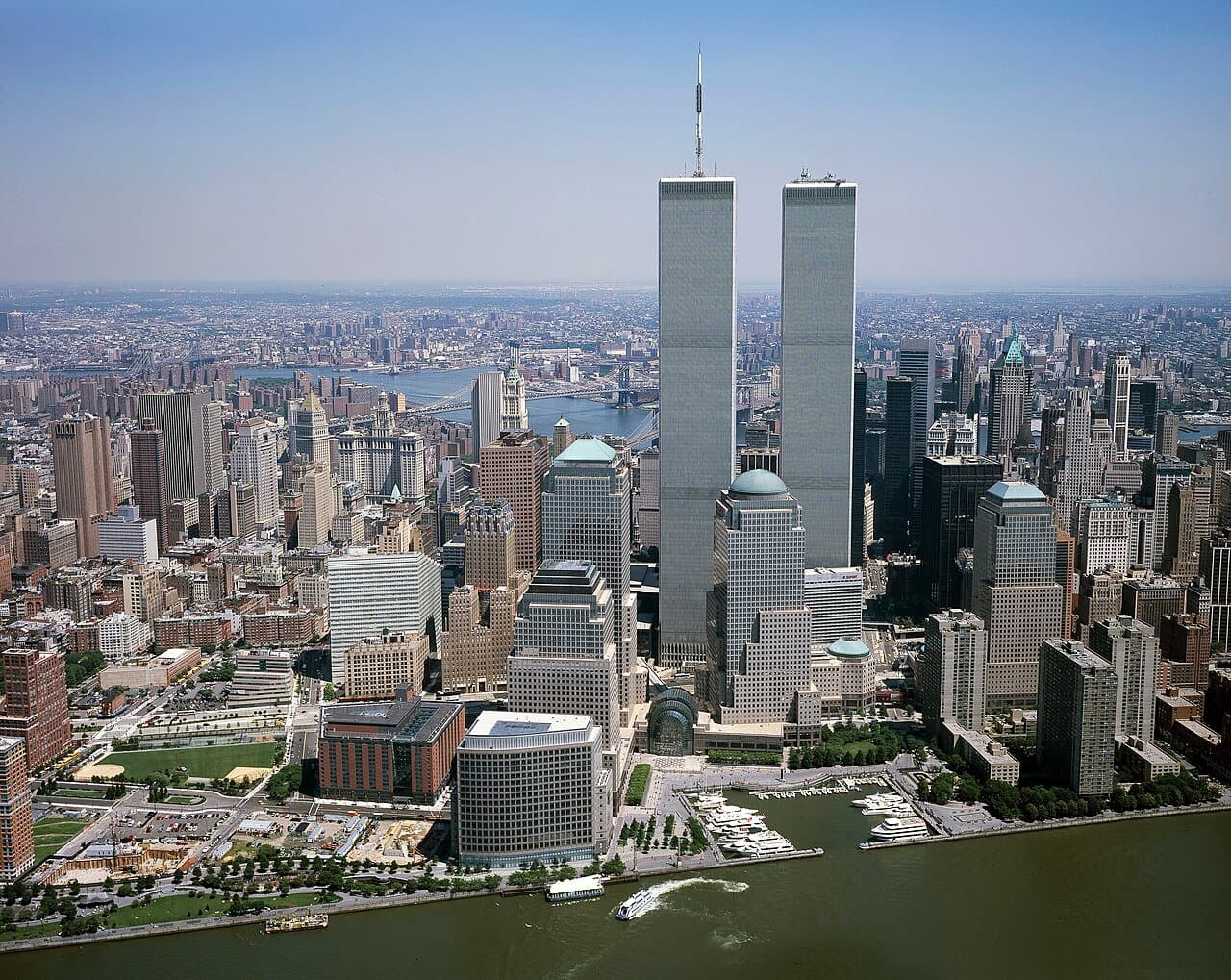
September 11. Two of my close friends, Matt O'Mahony and Glen Wall, were murdered in the World Trade Center. They were bond traders at Cantor Fitzgerald. There were a bunch of others too.
Photo: Carol M. Highsmith, Library of Congress, public domain
One of the stories I tell about that time is about Craig Spitzer, one of my closest friends, who is alive today. It was announced that summer that Michael Jackson and the Jackson 5 would be at Madison Square Garden. We were not big Michael Jackson fans, but it was MSG, the most famous arena in the world, and I wanted to see it. I told Craig, "We're going." I talked him into it, and we went. They were pouring champagne, and we got very drunk.
After the show we did something we had never done, even after all the games we had been to there. We walked into one of the bars near the Garden for another beer or two. For some reason I only understand now, it was God's hand. We got home very late, and very drunk. Craig's office was on the 104th floor of the World Trade Center. Mine was in the Chrysler Building. I was still in the financial markets.
No matter how late I got home or how drunk I was, I was always in early. I forced myself up and got in. Then I heard people screaming in the office and saw the tower get hit on the TVs we had in the office, and I knew we were in the middle of a major crisis.
I called Matt first. Back then you had a home number, a mobile number and a work number for everyone, and I called all of them. I could not reach him. Then I called Craig. He picked up, and I said, "Are you home?" He said, "Of course I'm home. You woke me up, you jerk." I said, "Dude, I have to make more calls, but we have a big problem. The World Trade Center got hit. Turn on your TV."
Craig is alive because of Michael Jackson and because of God. Eight, ten, maybe twelve of his people were in the conference room, under the table. They got a call out to Craig after the towers were hit, asking what to do, and of course he did not know. He told them to listen to the people in the tower.
As the day went on, we found out who was missing. At first there was a crazy amount of hope, because this is New York, where if you can make it there you can make it anywhere. The next days were full of optimism about finding survivors, and a lot of it happened in Craig's apartment.
Craig set up a triage there. The parents of the young people who worked for him, people in their twenties and thirties, flew into New York. We all pitched in. We set up systems, brought down water, did whatever we could, stood by the side of the road and cheered for the first responders. With every day that passed, we understood there was not going to be anyone else found.
I saw the look on the faces of those parents in Craig's apartment every single day. They were running this operation with us, and every day they understood a little more that they were not going to see their kid again. It was a disaster.
The massage. A month or two later I had an out-of-body experience on a massage table. I never get massages, and certainly not from a man, but at my gym there was only one person giving them, the head guy. He asked what kind I wanted. I said I did not know. "All right, let's try deep tissue." "Fine." The last thing he said was, "If it gets too difficult or hurts too much, you let me know."
I played every contact sport. I can take a beating, so hearing that from him was strange.
Within a minute or two I was in so much pain that something disconnected between my mouth and my brain. I could not say a word. The pain got deeper until I could not take it, and I started wailing and crying uncontrollably.
After some time I felt an electrical surge move through my body. It was not pleasant. It felt like being struck by lightning, and it went through my whole body, and I saw Matt's face float away from me. It went on for almost the entire session. When it ended, I pinned him against the wall and said, "What in the world was that?"
He said, "What happened? Was it a traumatic experience?" I said, "Of course." He asked, "How many funerals have you been to?" I said, "I don't know, roughly twelve." He said, "Did you cry?" I said, "No."
He explained that the body holds energy, and that when we do not mourn and do not cry, the grief can be held at the cellular level and then release, even as an electrical shock.
He gave me two books: Anatomy of the Spirit by Caroline Myss and The Monk Who Sold His Ferrari by Robin Sharma. I read them, and they put me on a new path. Around then I started dating a Jewish woman, which I had never done before, and she was taking a class at the Kabbalah Centre, which I had never heard of. I went to the class. I sat there, and within the first five minutes I knew it was for me. That was November or December of 2001. I have been studying Kabbalah ever since.
Chapter 6 · 2002 to 2010
Automating Everything
From Disney-stamped direct mail to one of the first nearly fully automated wealth firms.
Let me tell you what the manual years looked like. We would take a list of two or three thousand prospects, print a letter with my color photo on it, stick a Disney stamp on the envelope, and seal it. Then we would take the whole batch down to the basement and run test after test, back and forth, to see what lifted the open rates and, hopefully, brought in some inbound calls.
Illustration, generated image
So I took a stand for myself, and I automated my business.
By 2002 and 2003 I was overwhelmed. I was running my brokerage firm and doing everything by hand, and when the internet came out I saw that something had to give. So I took a stand for myself, and I automated my business.
We moved from direct mail to building an email list, where we could send real-time content based on what was happening in the market. That gave us a second channel, one where we could provide real value, strengthen our inbound calls, and offer opted-in opportunities like e-books. In the early 2000s I even started shooting video. Every month I produced a video report, so every single client was updated at the end of every month.
I digitized my entire financial company: landing pages, opt-ins, short-term and long-term nurture, opportunities and stages, and customer support, all tracked in automated sales processes. I became one of the first wealth management groups to run almost fully on automation.
During those years I was introduced to Mark Minervini, one of the world's top stock traders, with a shelf of books to his name. From about 2003 or 2004 through 2008 and 2009, we ran all of our portfolios using Minervini's trading methodologies. I got a chance to work with a real champion, one of the best of the best, and to see what it takes to operate with extreme discipline.
That discipline paid off for our clients when the world collapsed in 2008. The banks failed, the money market broke, and most brokerage accounts went from peak to trough down more than half. We were stopped out into cash at 16.78% for all of our clients and sat at 100% cash, protecting everybody.
By then, other financial companies were asking me how they could get off their spreadsheets. I started consulting with them, helping them automate their sales processes. That was my entry into becoming an expert in business and marketing automation, and it is what led to the invitation from John Assaraf.
Chapter 7 · 2008 to 2012
NeuroGym
8,000 customers in more than 70 countries in 16 months, and a stage in front of 1,500.
John Assaraf was my business coach and mentor in 1998 and 1999. After that we became good friends. I stayed in touch with him, and I was in some of his programs, in and out, over the years.
Then in 2008, I was coming out of a friendly divorce, with no kids, living in New York, and I had become an expert in digital marketing and in business and marketing automation. John convinced me to move from New York City to Del Mar and Rancho Santa Fe, to start NeuroGym with him in his backyard. For a while I carried two businesses: the startup with John, and my financial company, my clients and my hedge fund, which I held on to until NeuroGym had traction. Around 2010 it was time to wind the financial company down.
It was an amazing journey. I worked side by side with John, my mentor and a proven businessman with a real yearning to help people overcome their limiting beliefs. The mission was to help business owners win the game of money, the game of business, the game of fear and the game of procrastination. That was John's intellectual property, not mine. I got to grow and expand with his support and play at a new level, running everything on the digital marketing side. I built and ran everything digital and scaled the company. In its first 16 months NeuroGym reached 8,000 customers in more than 70 countries and did over $1 million in sales. Together with the team, I built one of the most successful live webinar launches of the year.
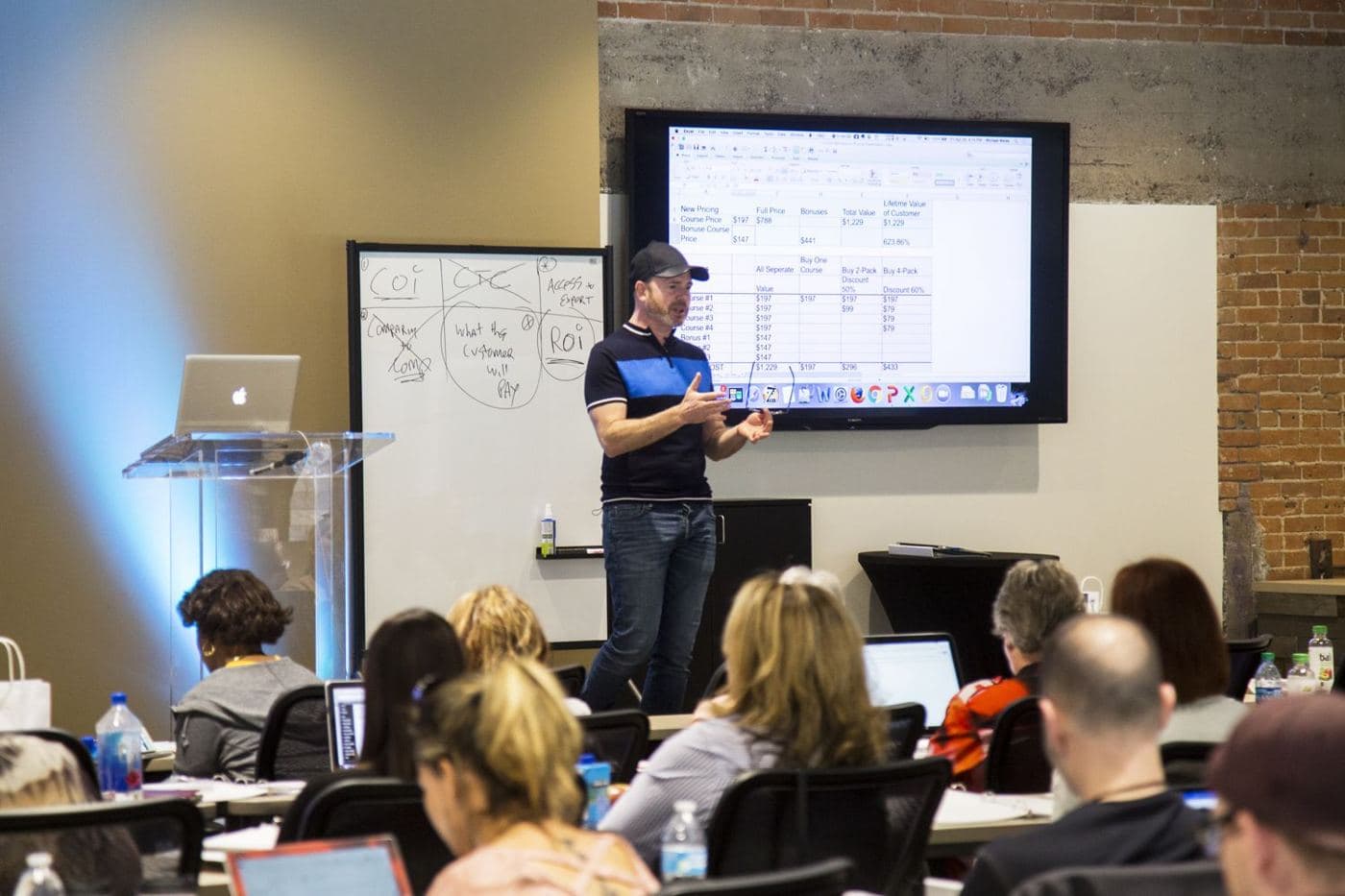
It was not easy. It was challenging as a startup. It was challenging to hire and manage people, and even to fire people. And it was a great challenge to make sure the customers who bought our product got outcomes. So we built a manual customer wow team to move the needle. When we started, only 3% to 12% of customers finished. With humans on the job, we got it up to the low twenties.
The success of that funnel, and its complexity, is what got me on stage in 2012.
The success of that funnel, and its complexity, is what got me on stage in 2012. About 400 companies applied for Infusionsoft's Ultimate Marketer award, and I finished in the top four. I spoke in front of 1,500 people.
INFUSIONCON 2012.
Later in 2012, I was successfully bought out of NeuroGym. Then I moved to Los Angeles.
Three mountains. Looking back, three mountaintops mark my life. The first was that scooter ride over the mountain in Japan. The second was in Fiji, where we almost froze to death. There was a big sign that said "Don't climb. The season just ended," and it turned out we were only two weeks past the season. A crazy storm caught us, and we ended up carrying all the bags for all the people. The third was in California, while I was visiting my sister. I took a slow walk to the top of a mountain and did some deep meditation to figure out whether the relationship I was in was right, and whether I wanted to build a family with this person. She was lovely. But I came down that mountain with a no. Mountains are very spiritual.
Chapter 8 · 2008 to 2014
A Little Bird Told Me
Years of no, and one yes in the last thirty seconds of a breathing class.
The story of how I met my wife is a good one.
I had been deep into Kabbalah for years. Every Rosh Hashanah the Kabbalah Centre holds a global event with a couple of thousand people, and in 2008 I went to the one in Washington, D.C. When the three days were over, I jumped in a cab to go to the airport. I jumped in the cab with a woman named Carolyne and her girlfriend, because she was cute. I started a conversation, and I got her number. She was from London, and she was living in Miami. I was about to go out to California to start the company with John.
I tried to take her out. Over the next few years I saw her at Kabbalah events, I asked her out, I tried to date her, and it never worked. She kept saying no.
Then came the Rosh Hashanah event in San Diego, in September 2014. I went. I saw Carolyne there, and a very spiritual man from the Kabbalah Centre came up to me and said, "Are you ready to be in a relationship and get married?" I said yes. He said, "I might have a girl for you." I said, "Who?" He said, "Carolyne." I said, "Carolyne? The English one? No, that is not going to work. She has said no year after year after year." He said, "Well, be open."
What I did not know was that on the last day of the event, he had the same conversation with her.
We were walking into a breathing meditation class, and we ended up at the door next to each other. I put my mat down next to hers and said, "A little bird told me we should meet. Did he say anything to you?" She said yes. I said, "Let's do this. By the end of this class, if you want to get together, say yes. If not, it's a no, and that's it. It will be a no forever for me."
And in the last thirty seconds of the class, a yes popped into her head, and she said it.
So we were jumping up and down and doing all this breathing, and in her head she was saying, "No, no, no. This guy doesn't get it. Why is he asking now, after all these years? I keep saying no." And in the last thirty seconds of the class, a yes popped into her head, and she said it. She was in shock that she said it. I was in shock that she said it.
That night, the last night of the event, we went to Nobu in San Diego. We sat there in front of twenty of the Kabbalah teachers we both knew, from ten or fifteen years in the Centre. It was extremely awkward. It was like a first date in front of your parents.
Afterward, walking back to the hotel, I was about to drive from San Diego to Los Angeles, and I asked, "So what's the plan? How are we going to do this? Are we doing a second date?" She was living in Florida. She said, "Well, if you want a second date, I guess I'll see you in Israel. I'm flying to Miami tonight, and tomorrow I'm flying to Israel for three weeks, for all the Jewish holidays."
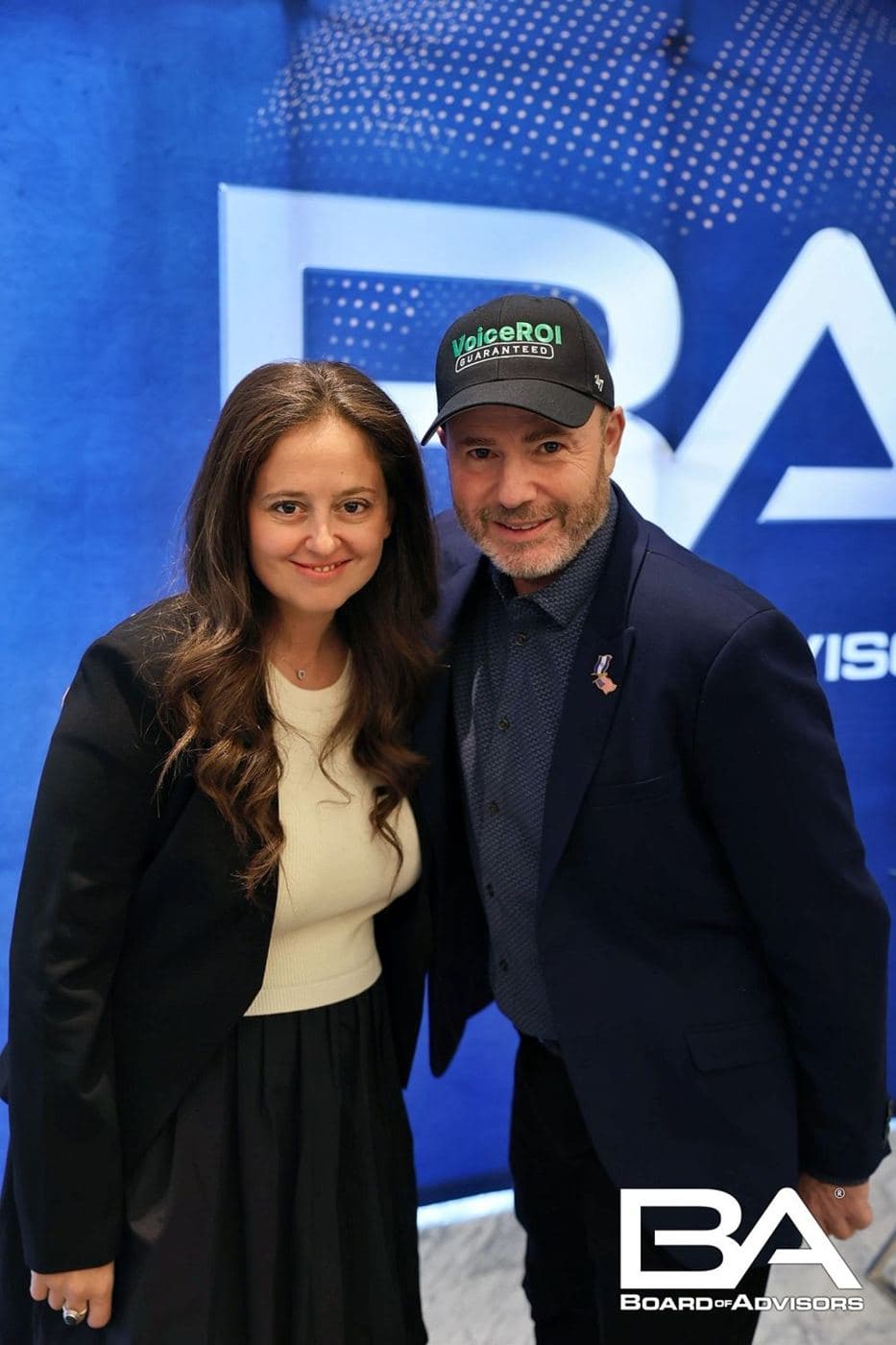
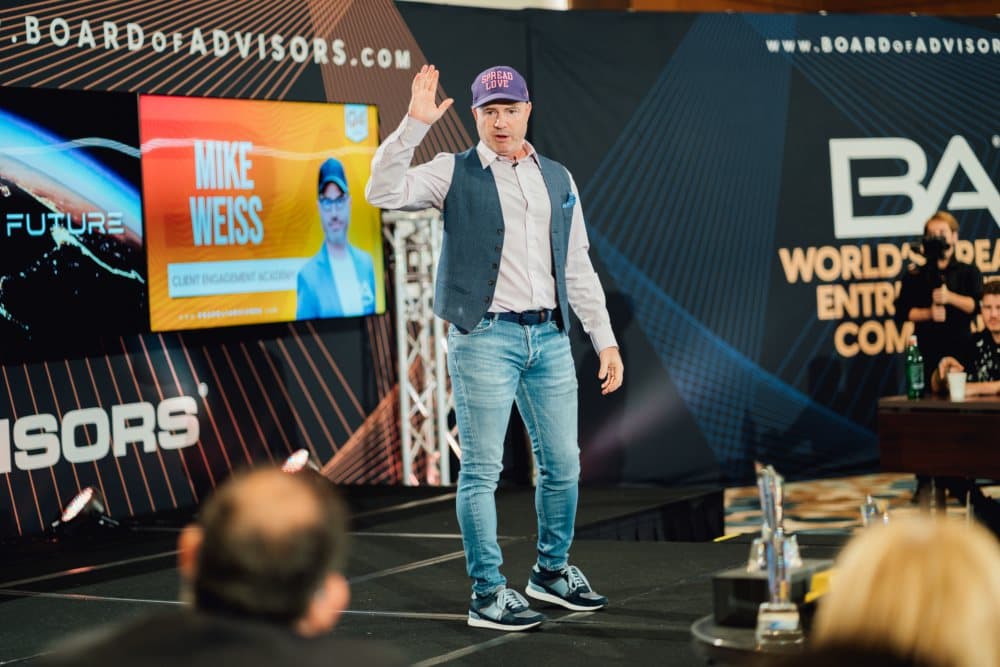
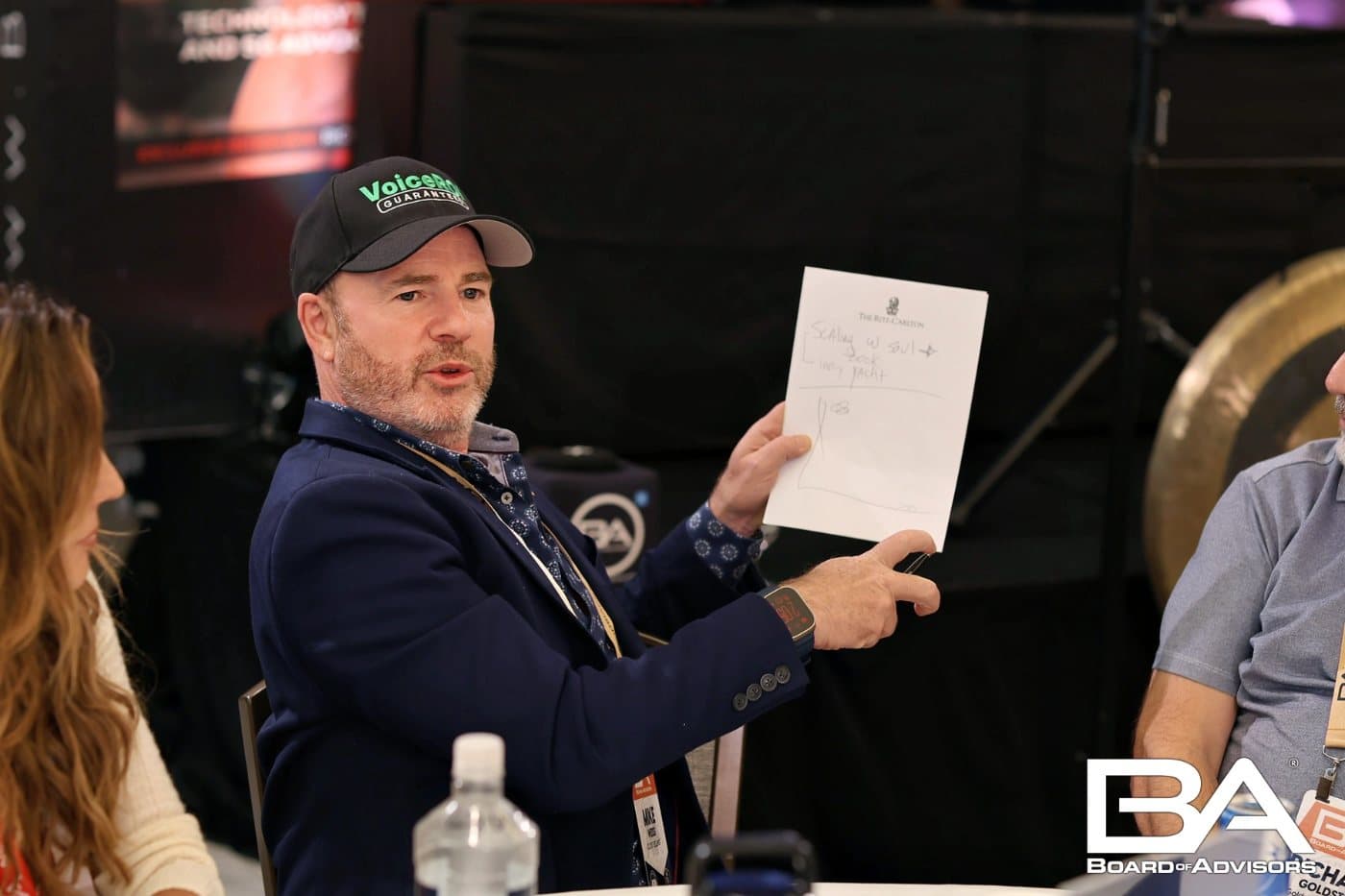
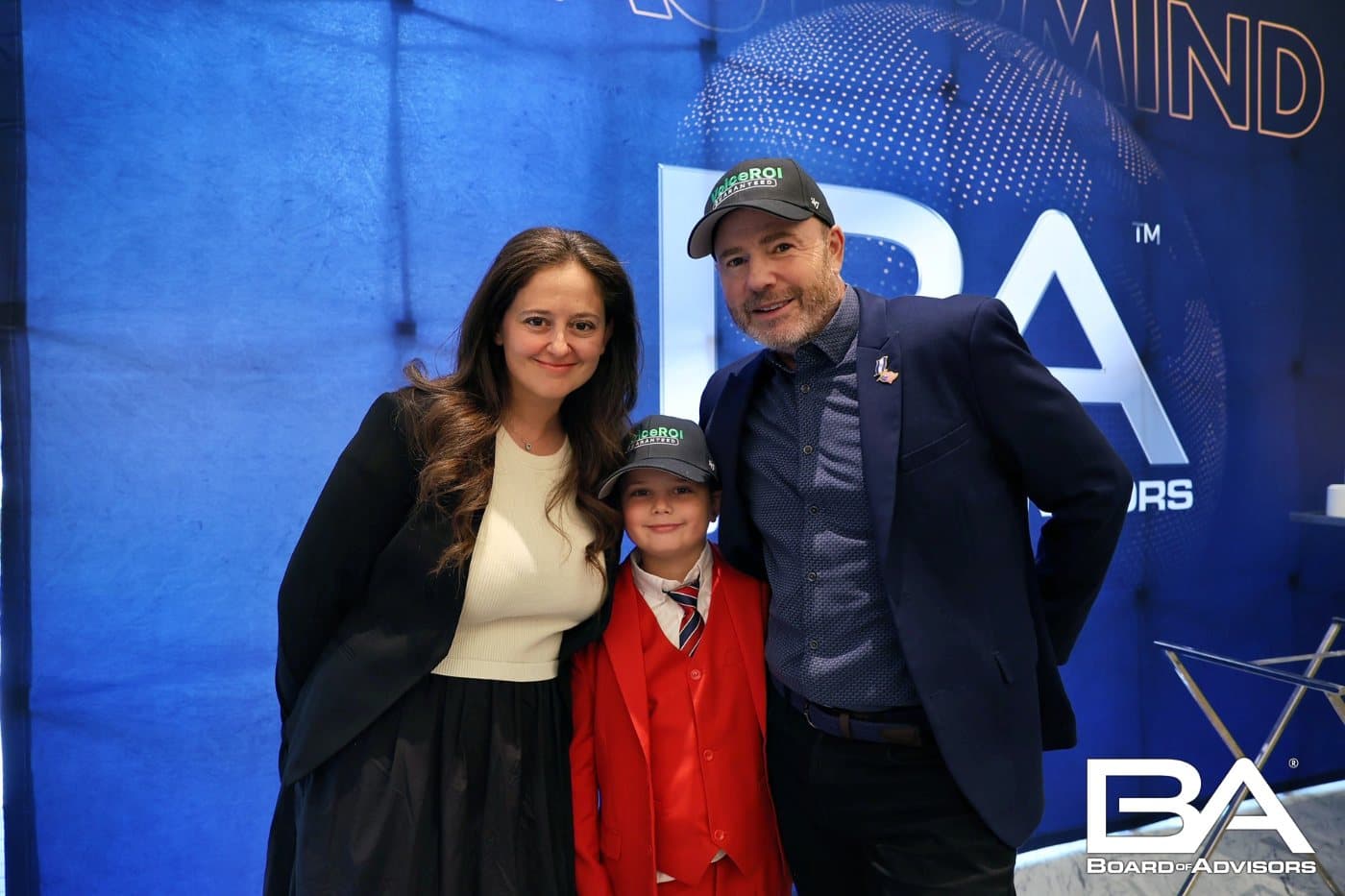
Carolyne and me at a Board of Advisors event.
I said, "Oh. Okay." In her mind there was no chance I would fly across the world on a few days' notice for a second date.
Later that week I was talking with my teacher, and he asked how the event had gone. I said, "Great. I met Carolyne," and I told him what happened. I told him I needed to go to Israel. I had less than twenty-four hours to get on a plane, and it was Shabbat, so no phones and no computers. He said, "I have known her for many, many years, and she is an incredible lady. If that is what she said, I would find a way to get to Israel."
When Shabbat ended on Saturday night, I had to leave by Sunday morning to get there before Yom Kippur. And I did something I never do. I said, "Okay, God. How am I supposed to get there? Show me."
I pulled up every ticket for the next morning. They were thousands of dollars, or hundreds of thousands of points. Then there was one flight, with one stop, through either Milan or Rome, I can't remember which, for about 35,000 miles. I thought, "Whoa. Something is not right."
I did not trust the computer, so I called and got an agent on the phone. She said, "I don't think I see anything in the system." I said, "Check this flight." She pulled it up and said, "Wow, I have never seen anything like this. If you want it, you need to tell me right this second." I said yes, and the flight was booked.
That is how I ended up in Israel.
Photo: Yourway-to-israel, Wikimedia Commons, CC BY-SA 3.0
Over the next two or three weeks we bonded and became a couple. We came back, I moved across the country, and within a year we were married. A couple of years later, we had our son.
Chapter 9 · 2013 to 2019
Revolutionizing an Industry
Course completion from 3% to 12% up to 40% to 80%.
After NeuroGym I helped small business owners deploy sophisticated business and marketing automation and funnels. And I noticed that the education world was booming and failing at the same time.
I had lived this at NeuroGym. Only 3% to 12% of people who buy an online course ever finish it, and even a human wow team only got us to the low twenties.
We revolutionized an industry that had accepted failure as normal.
So I took a stand for the individual who invests in a course to get a result, and I created Client Engagement Academy. It was a completely done-for-you process, system and EdTech platform. It took completion rates from 3% to 12% up to 40% to 80%. We did not just start another company. We revolutionized an industry that had accepted failure as normal.
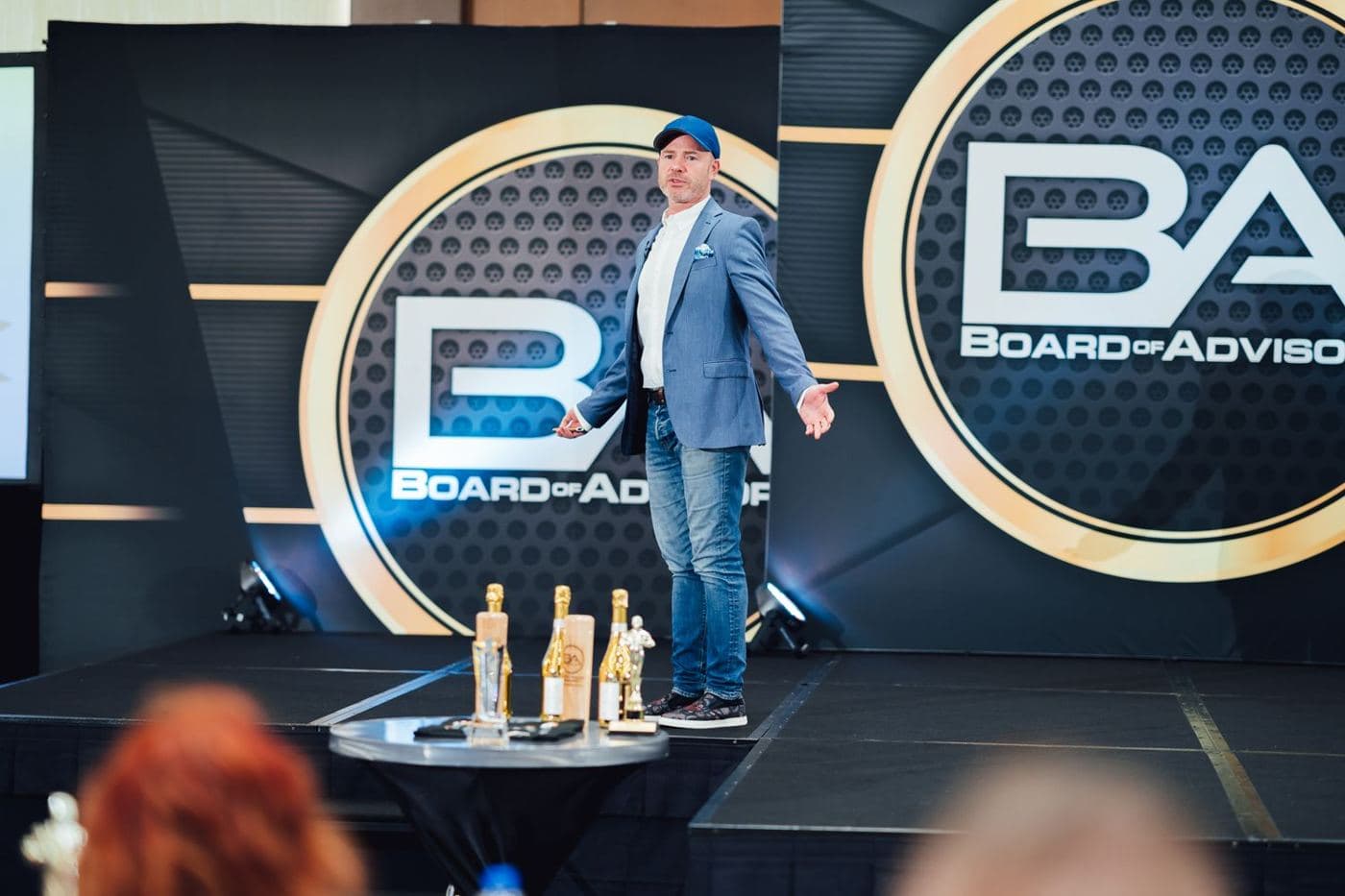
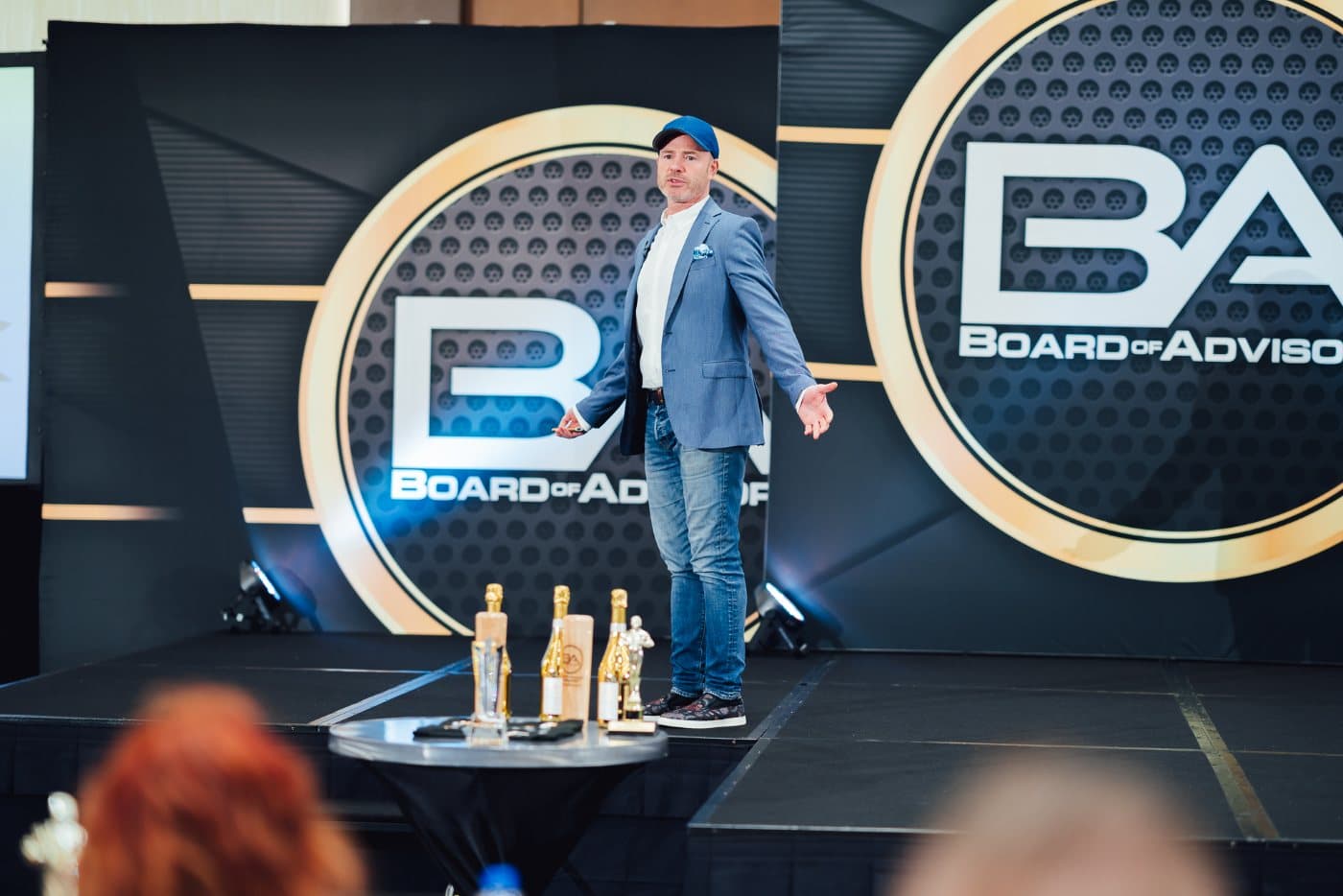
On stage at a Board of Advisors event.
The clients were the proof. We worked with Digital Marketer and Orion Dice, and I was instrumental in launching their certification programs, which went on to generate more than $10 million in revenue. I was instrumental in the reorganization and restructuring of the global certification program for Profit First, a company that trains accountants and bookkeepers. I helped restructure Dan Kennedy's membership site and created learner pathways that improved everyone's experience. We got 40% to 80% completion across the board, and that is only a fraction of the clients we worked with.
Chapter 10 · 2020 to 2021
Smoked by COVID
COVID took the pipeline to zero, and I pivoted to LinkedIn.
Then COVID smoked us.
I pivoted to survive.
We had niched down. Our pipeline was keynote speakers, live events and course creators, and almost overnight it went to zero. I pivoted to survive. I turned to helping business owners get leads, because everyone around me was struggling and leads were what they needed.
Gary Vaynerchuk taught me how to use LinkedIn. I built a done-for-you LinkedIn service for CEOs and executives, which became Clout Selling. Over time that work has produced more than half a billion views, and my own following has grown to 25,000, mostly business owners and executives.
Chapter 11
The Thread
One pattern: find the gap, build the system, do the work, stand behind the result.
Look back across all of it and the thread is plain.
Every time, the same pattern: the owner is underserved, I see the gap, I build the system, I do the work, and I stand behind the result.
GreenTrak was done for you, on Wall Street. Running money for clients was done for you. The automation was done for you. Client Engagement Academy was done for you. Clout Selling was done for you. Every time, the same pattern: the owner is underserved, I see the gap, I build the system, I do the work, and I stand behind the result.
I call it the Done-For-You Responsibility Loop. Find what the owner is being denied. Automate it. Do the work for them. Own the result.
Chapter 12 · 2022 to 2025
The AI Years
A 2 AM sales page, a tear, and the realization that owners will not deploy AI themselves.
ChatGPT came out on November 30, 2022. Like everybody else, I was intrigued the day it launched, and I started playing with it. As a technologist and a futurist, I fell in love with it. I normally get up at 5:15 in the morning, so I go to bed early. I spent hours and hours going back and forth with it.
One night I ended up using it for copywriting, because it was the first thing that hit me as a real breakthrough. For every company I have ever had or advised, landing pages and sales pages were the bottleneck. I had been held hostage by expensive copywriters for years. They were the most expensive part, the least reliable part, and not one of them ever stood by their work.
It was one or two in the morning, a time when I am normally tucked into bed, and I wrote a piece of sales copy that was shockingly good. Sitting there in the quiet of the night, I felt an overwhelming sense of freedom. Freedom from being held hostage by copywriters. Freedom from knowing that I now had the most powerful tool I had ever put my hands on, one that would let me create, innovate and write at scale, with no limits.
Illustration, generated image
I knew we were on the verge of a revolution.
It got emotional. A tear came to my eye. I knew we were on the verge of a revolution.
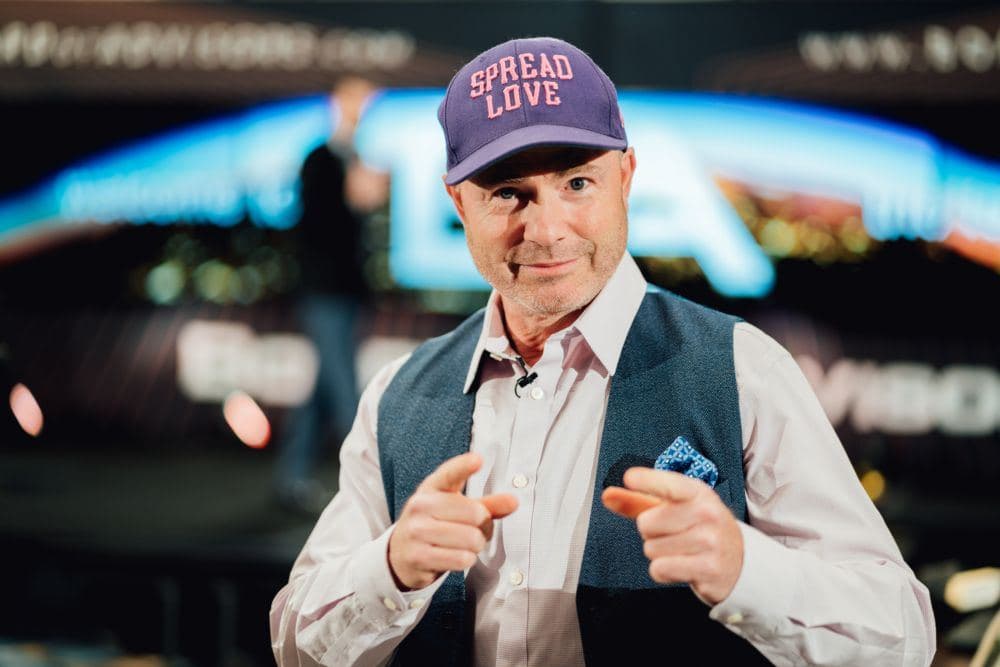
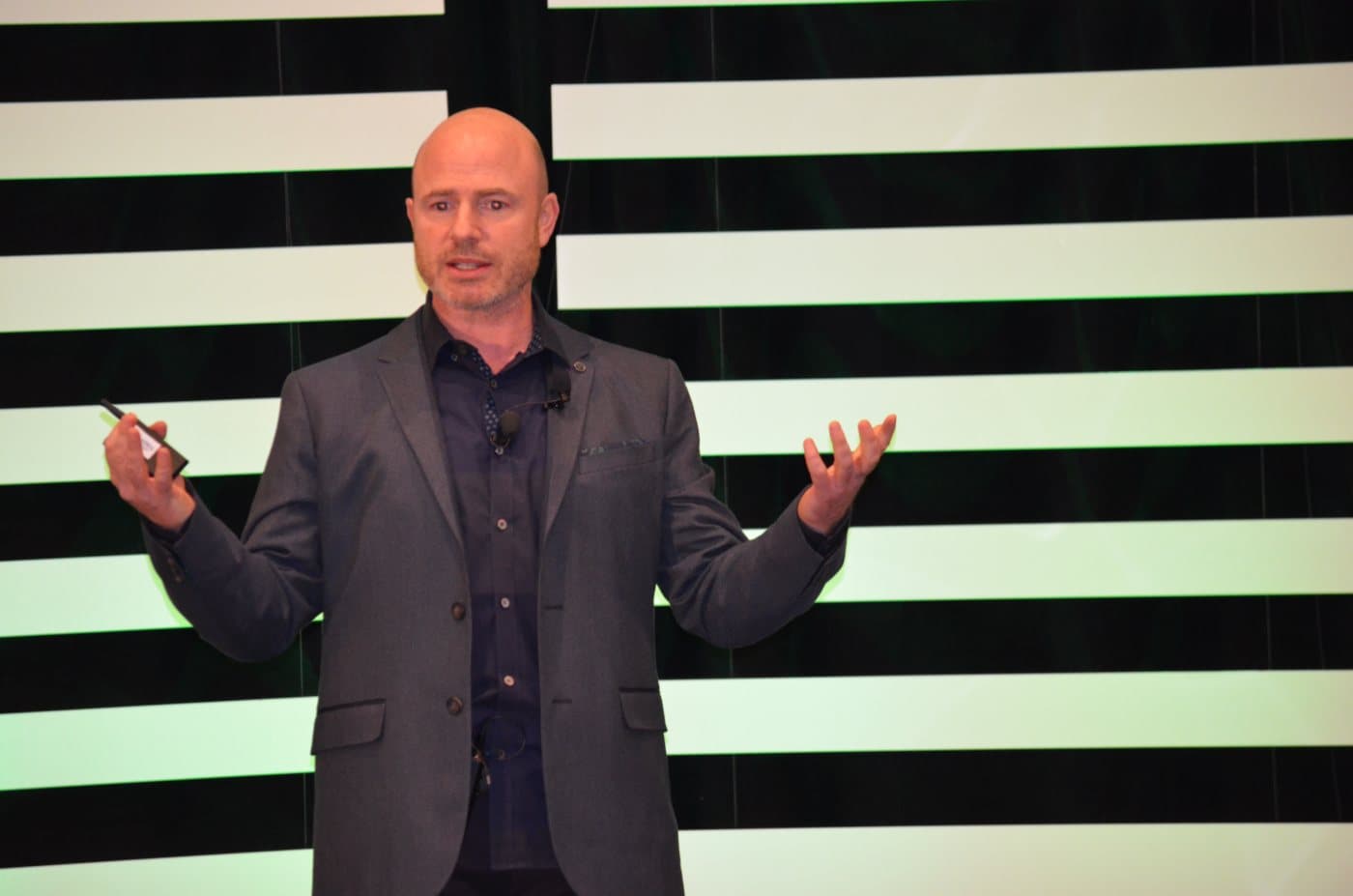
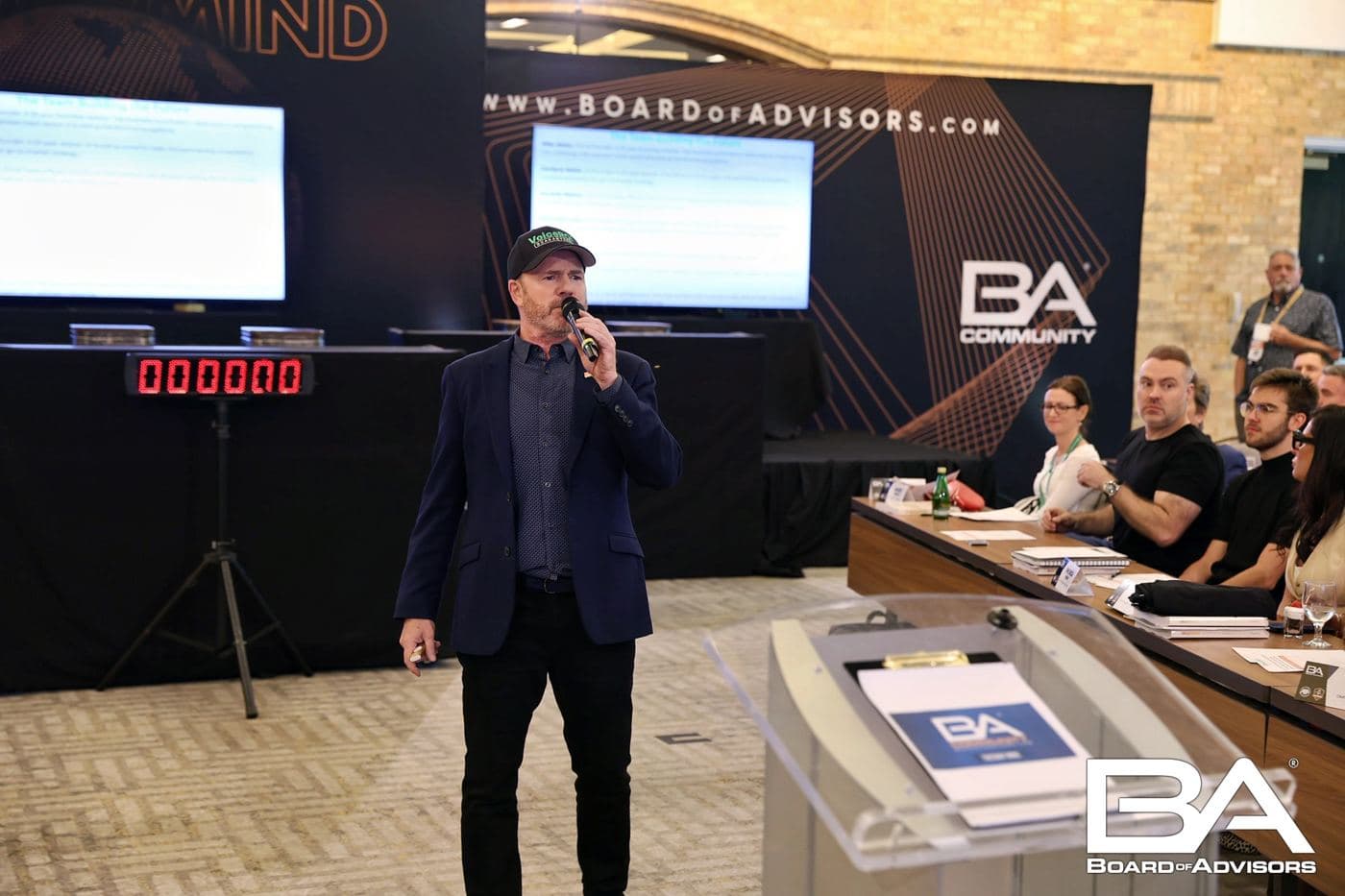
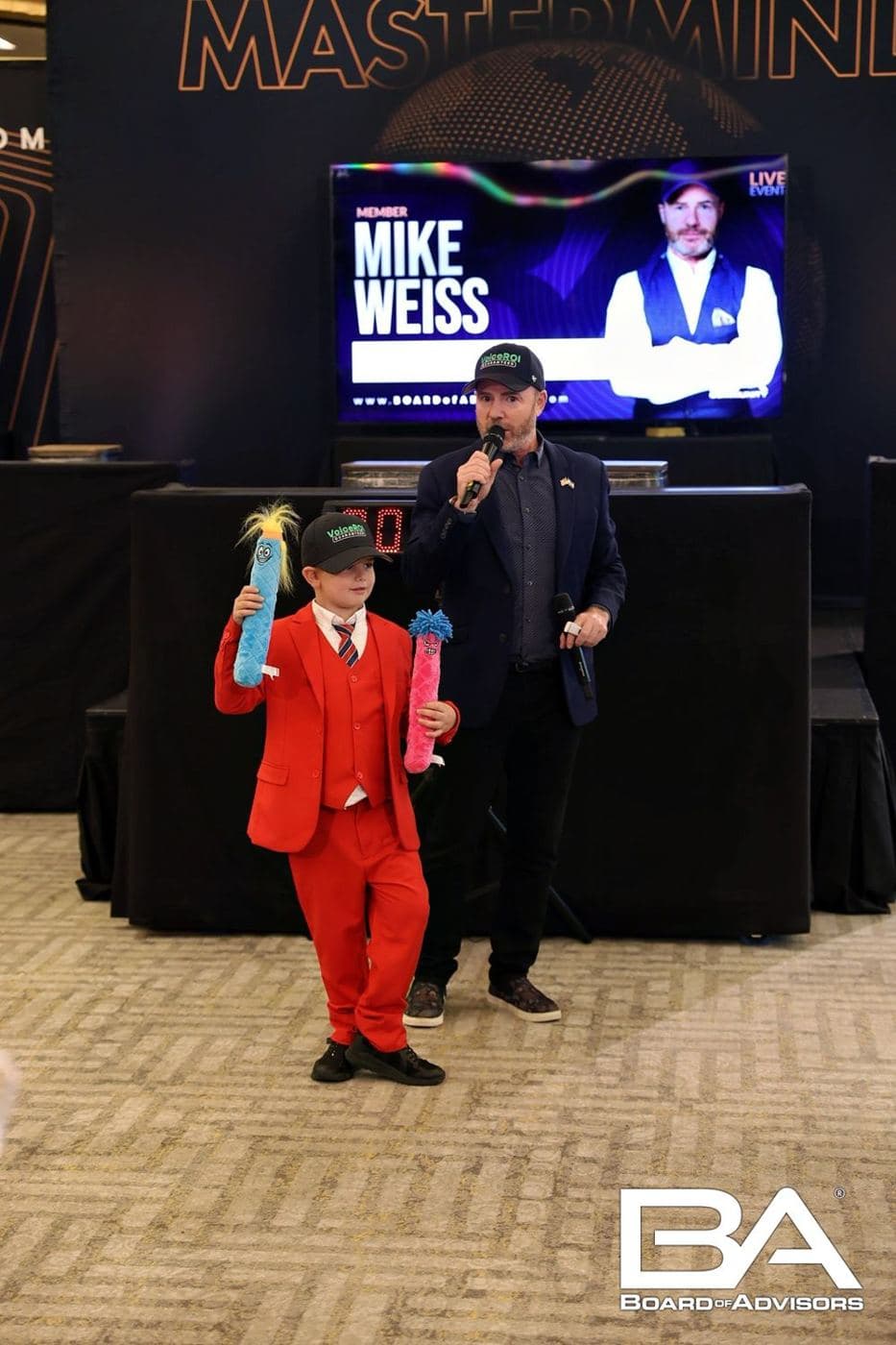
On stage at a Board of Advisors mastermind.
When I saw the big movement in AI, we built our first AI software, internally. It was amazing.
I saw the future clearly. At the same time I knew there was zero chance that service business owners were going to figure this out and deploy it for themselves.
The data backs that up. MIT's 2025 study found that about 95% of enterprise AI pilots showed no measurable profit impact within six months. The companies that succeeded partnered with a specialist who had done it before.
Chapter 13 · 2025 to today
VoiceROI
A done-for-you AI digital worker, and a promise: hit your KPI in six months or we work for free.
That is how VoiceROI came about: to take a stand for the business owner, and take full responsibility for deployment and results, in a done-for-you way.
My wife, Carolyne Rattle, is our co-founder and COO. We serve small and mid-sized businesses in the United States that use the phone to serve customers, book appointments and qualify leads. They are service companies, like doctors, dentists, lawyers and accountants, and home service companies, like roofers, electricians and plumbers.
We do not sell software. We build a customized AI digital worker for each business. It answers every call on the first ring, at three in the morning, on Christmas, ten calls at once. It dials old leads, books appointments and asks happy customers for the review the human never got to. Your scripts, your offers, your voice. We build it, run it, measure every call and improve it every week. Your part is under two hours.
If we do not get there, we work for free until we do.
And we put our name on the result: 20% more on the number we agree on, within six months of going live. If we do not get there, we work for free until we do.
Chapter 14
Home
Sunny Isles Beach, Carolyne and our son, and an invitation.
I live in Sunny Isles Beach, Florida, with Carolyne and our son, who is eight. We are a practicing Orthodox Jewish family, and I have studied Kabbalah for 25 years. I eat clean and get outdoors every chance I can.
After 39 years, my belief has not changed. The small business owner built something real, and deserves someone in their corner.
If you are one of them, go to demo.voiceroi.com and experience it yourself.
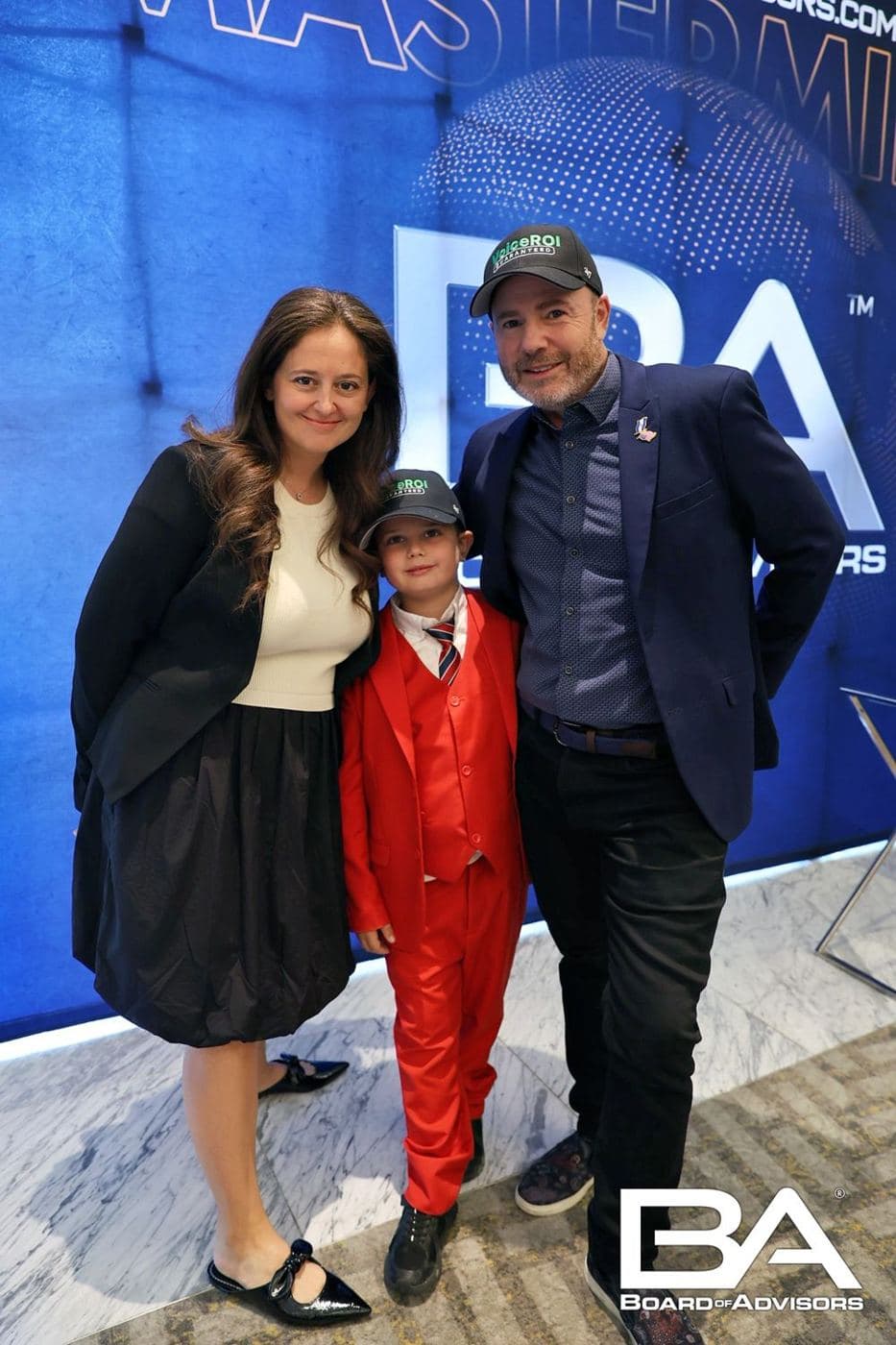
Carolyne, our son and me at a Board of Advisors event.My son and me on stage.
Mike Weiss Founder and CEO, VoiceROI
Questions
Questions people ask about Mike Weiss
What is VoiceROI?
VoiceROI builds a customized AI digital worker for each business. It answers every call on the first ring, dials old leads, books appointments and asks happy customers for a review. We build it, run it, measure every call and improve it every week. We serve small and mid-sized businesses in the United States that run on the phone: doctors, dentists, lawyers, accountants, roofers, electricians and plumbers. My wife, Carolyne Rattle, is our co-founder and COO.
What is the VoiceROI guarantee?
20% more on the number we agree on, within six months of going live. If we do not get there, we work for free until we do.
What did you do before VoiceROI?
I spent 23 years on Wall Street, from 1987 to 2010, moving from stockbroker to fiduciary, and raised more than $100 million for clients. I co-founded GreenTrak in 1994. I helped build NeuroGym with John Assaraf from 2008 and was bought out in 2012. I founded Client Engagement Academy in 2014, and after COVID I built Clout Selling, a done-for-you LinkedIn service for CEOs and executives.
What was GreenTrak?
GreenTrak was a reporting service for high net worth investors that showed real performance and real fees, laid out like baseball standings. My partner and I started it in 1994 after we found that none of ten brokerage statements disclosed either one. It merged privately in 1998 with a much larger company at a valuation close to half a billion dollars. Kinexus acquired it in 2001, and Advent Software bought Kinexus in 2002. I was a co-founder. I did not run it alone or sell it alone.
What was your role at NeuroGym?
NeuroGym was John Assaraf's intellectual property. John was my mentor, and in 2008 I moved to California to build it with him. I ran everything digital. In its first 16 months NeuroGym reached 8,000 customers in more than 70 countries and did over $1 million in sales. In 2012 I finished in the top four of about 400 companies for Infusionsoft's Ultimate Marketer award and spoke in front of 1,500 people. Later that year I was bought out of NeuroGym.
What is Client Engagement Academy?
A done-for-you process, system and EdTech platform I founded in 2014 so that people who buy an online course actually finish it. Only 3% to 12% of buyers usually complete a course. Client Engagement Academy took completion up to 40% to 80%.
Where do you live?
Sunny Isles Beach, Florida, with Carolyne and our son. We are a practicing Orthodox Jewish family. I have studied Kabbalah for 25 years.
How do I reach you?
Go to mikeweiss.com/work-with-mike. Investors, clients and media each have a path there, and there is a form for everything else.
See a VoiceROI voice agent at work for your business.